Al Burhan and the Doctors
Talaat Mohamed El Tayeb
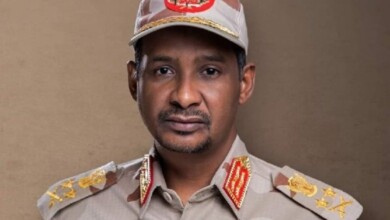
The statements made by General Abdel Fattah Al-Burhan regarding the role of some doctors in providing the Sudanese Armed Forces (SAF) with information have garnered widespread interest, given their implications for the nature of the relationship between civilian professions and the ongoing military conflict in Sudan.
The medical profession, by virtue of its humanitarian mission, is based on the principles of neutrality and providing care to all patients without discrimination, which means that any involvement in the conflict becomes a matter that invokes a certain level of profound ethical questioning.
Nevertheless, its important to distinguish between individual cases —if proven— and generalizing the accusation to an entire professional group.
History shows that political pressures and wars can drive some individuals within State institutions, including the health sector, to practices that contradict professional standards. However, such a reality does not necessarily mean the collapse of the profession’s ethical framework as a whole.
Numerous historical examples have witnessed the politicization of professions and civil services, where institutions lose their neutrality under the influence of totalitarian regimes or the conditions of war.
The aforementioned often leads to a weakening of public trust in these institutions, which, naturally, is extremely dangerous in the case of the health sector, as its fundamentally based on trust.
As for civil society organizations and their reports during conflicts, their credibility remains tied to their commitment to objectivity and independence.
Therefore, any impression of politicization in these reports —whether accurate or exaggerated— can negatively impact public trust, especially in a highly polarized environment.
In light of the aforementioned reality, a certain need makes its presence known, a need to approach such statements with caution and to verify facts, whilst upholding the fundamental principles of humanitarian work, foremost amongst which is neutrality and impartiality, in an effort to ensure that these institutions remain at the service of society, free from polarization.
However, the growing influence of certain totalitarian currents within Sudanese civil society organizations, including some human rights organizations serves to further complicates the situation.
These organizations are, in some cases, being directed to serve political agendas, which can negatively impact their independence and credibility.
For a number of political currents with Islamic Movement affiliations view their activism as part of an ideological commitment or a form of jihad, whilst some leftist Movements believe that such organizations are tools of social struggle, which, from their perspective, might justify their use to achieve political goals.
Between these two perspectives, the need to fortify civil society organizations with the values of transparency and impartiality remains, so that they can maintain their essential role in serving society.