The MB’s Growing Threat in Sudan’s War: From Internal Conflict to Continental Threat
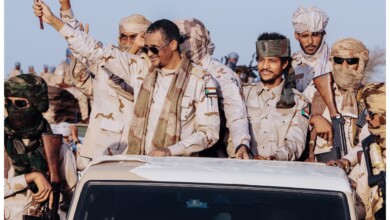
The Sudanese war, that has been raging since (April 2023), is witnessing new developments that serve to highlight the complex role of groups affiliated with the Muslim Brotherhood, not only as a party to the internal conflict but as a factor threatening regional as well as continental stability.
According to a recent report published by (Al-Ain News), the conflict between the Sudanese Armed Forces (SAF) and the Rapid Support Forces (RSF) is not limited to being a military confrontation between two sides, indeed, it extends to include transnational ideological and organizational structures, where the interests of political Islamist groups intertwine with those of regional powers such as Iran.
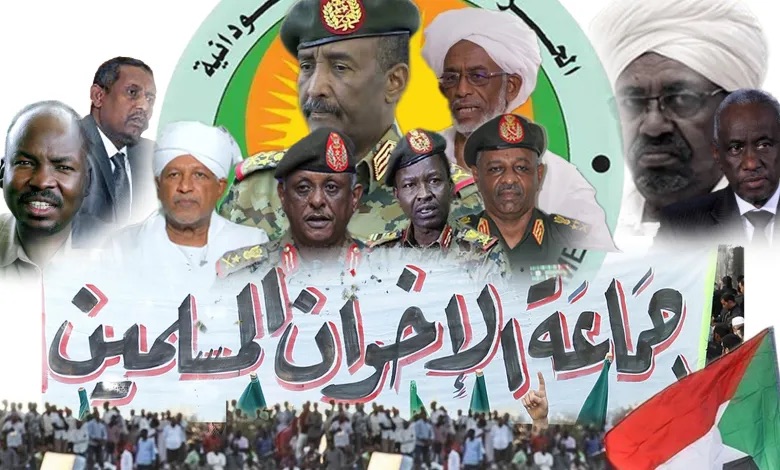
Furthermore, the report highlighted the Muslim Brotherhood leaders’ infiltration into the Sudanese State institutions and the subsequent use of their networks to support the operational structure of the conflict by mobilizing and organizing armed elements into formations such as “Al-Baraa Ibn Malik” Brigade and the “Homeland Shield / Dar’ al-Watan.”
The published report confirmed that such groups received weapons and funding through official channels, effectively blurring the lines between Regular Forces and ideologically-motivated militias. Forces close to the Muslim Brotherhood played a pivotal role in thwarting attempts at de-escalation, obstructing negotiations, and employing a mobilization rhetoric that portrayed the war as an existential struggle against “external enemies” and “civilian alternatives.”
This particular dynamic unfolds within a broader context that extends beyond the borders of the Sudanese territory: For the long history of extremist groups in Khartoum, including hosting Osama bin Laden and forging alliances with Movements like Hamas, further demonstrates these networks’ capacity to function as a “regional hub for extremism and violence.”
The war in Sudan constitutes far more than a national crisis; its a crucial test for stability across Africa, particularly in the Sahel and the Horn of Africa.
Moreover, the pragmatic relationship between certain factions of the Muslim Brotherhood and Iran illustrates how shared interests can propel the organization to play strategic roles at both the local and international levels.
However, given these facts, analysts believe that the war in Sudan constitutes far more than a national crisis, for its a crucial test for stability in the African continent, especially in the Sahel and Horn of Africa regions, as its repercussions will not be limited to the Sudanese interior, but may extend to Europe through waves of irregular migration and cross-border armed conflict networks.