On the threshold of the disastrous era of militias
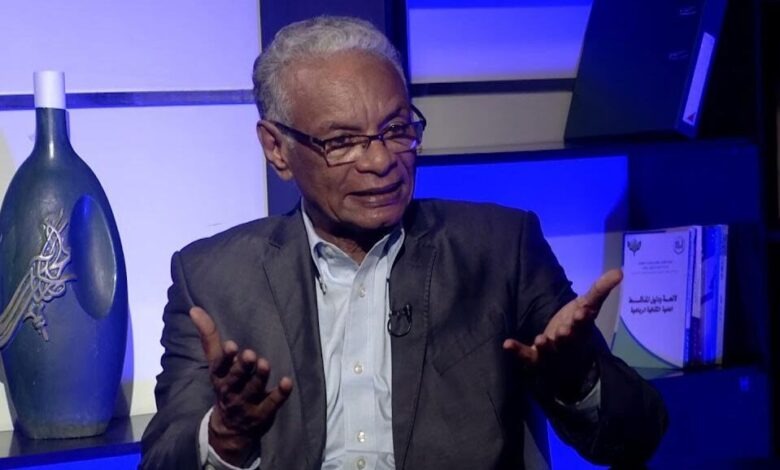
Dr. Al-Nour Hamad
Perhaps a significant number of us may have thought that the catastrophe we are currently experiencing is the maximum sentence that can result from the Muslim Brotherhood’s obsession, recklessness, unbridled violence, bloodshed, and indifference to the fate of the country and its people. However, in my estimation, this authoritarian path, which has been steadily declining since (June 30th, 1989), has yet to reach its inevitable, catastrophic end. The war they launched on (April 15th, 2023), failed to bear fruit. General Al-Burhan and his group believed that eliminating the Rapid Support Forces (RSF), which had rebelled against their command, would take only a few days, after which they would devote themselves to eliminating all civilian forces. The outcome, however, was the slaughter of the revolution, burying it, its initiators, and its goals in a single grave. Nevertheless, the naive and foolish assessments were disappointed, and the arrow of crude, reckless jeopardy went astray. The reins of power slipped completely out of control, and everything sank into a whirlpool of chaos, randomness, and improvisation. Every aspect was reduced to buying time in anticipation of an event that would never come.
Truth be told, it became rather clear from the first few months of the war that there was no Army worthy of the name. Nor were there Military Commanders worthy of their ranks. Instead, there were businessmen dressed in military uniforms, with medals glittering on their shoulders and chests. Therefore, it didn’t come across as much of a surprise that the management of the war fell, ironically, to both Naji Mustafa and Naji Abdullah. They began to slink from city to city, from village to village, calling for militarization and the mobilization of citizens, even acting as interrogators of the Sudanese Army officers, who sat in their presence, broken and bowed, listening to warnings and threats without uttering a word. The Military leaders are fully aware that what both men are daring to commit has little to no military return. Yet, despite its shortcomings, it helps to galvanize the sentiments of the common people, who, through an intense amount of deception and shuffling of cards, are aligned behind this brazen and risky attitude that has wreaked havoc across everything.
The Darfuri Movements’ Blackmail of Al Burhan
Since Al-Burhan and his group aren’t accustomed to admitting mistakes, and are known for their pride in sin, they have resorted to seeking assistance and support from the Darfuri Armed Movements as well as others to achieve a victory that failed from the outset. In addition, because the experiences of the first few months of fighting demonstrated the modest capabilities of the Sudanese Army, the Darfuri Armed Movements seized the opportunity to leverage said flaw against General Al-Burhan, and the Muslim Brotherhood supporting him, in an effort to achieve their fundamental aspirations of accumulating money, power, prestige, and overwhelming military strength. Therefore, the militias engaged in combat alongside the Sudanese Army after imposing their conditions on General Al-Burhan, which they continue to impose.
Jibril and Minnawi’s involvement in the war, fighting alongside the Sudanese Army occurred gradually. At the beginning of the war, they remained neutral and called for an end to the war through dialogue. However, between May and June (2023), their rhetoric began to favor the Sudanese Army and the Islamist leaders who controlled it. After (July 2023), both announced their involvement, fighting alongside the Army. Their initial hesitation appears to have been an effort intended to allow the Sudanese Army time to come to the conclusion that, fighting without both of them -to support- demonstrated the Army’s weakness and its need for them, strengthening -in turn- their bargaining position. Hence, with every defeat the Army suffered, and there were many, it became rather easier to force the Military leaders to submit to the demands of the Darfuri militias.
As a result, both -Jibril and Minnawi- received large sums of money in exchange for abandoning neutrality, in addition to military equipment and ensuring their continued control of ministries as well as financial resources, which they have retained to this day. The aforementioned reality will remain unchanged as long as the Port Sudan gang, and the Islamists supporting it, hold power. Kamel Idris’s failure to dismiss them from their positions, be it in ministries or institutions they control; is the most conclusive indicator of their control over Al-Burhan. Furthermore, the outcry from a number of Islamists, who wanted to reclaim these ministries and institutions for their organization, was ineffective.
Jibril and Minnawi have proven -beyond any shadow of doubt- to be no more than warlords, and that any discussion regarding Darfur’s grievances is merely a banner they raised to achieve financial gain, status, and prestige, with no qualification other than a rifle. Hence, they betrayed the revolution that brought them from the countryside and chose to join the camp of those who hated it. Minnawi, who was appointed governor of Darfur, fled his capital, El-Fasher, a few months after the war began, to Port Sudan, to live safely in the new power headquarters. He never considered it his responsibility as governor of the region to remain amidst his soldiers in the Sixth Infantry Division Camp, defending his region and capital. He preferred to pursue the bargaining market that had become increasingly glamorous in Port Sudan.
On the Threshold of the Dark Era of Militias
Al-Burhan, his allies (Al-Kizan), and their paid journalist supporters believe they are the most experienced and knowledgeable of all Sudanese. Because they are a people who “neither repent nor remember,” they have continued -with unprecedented extravagance- to creating militias, having failed to resolve the vicious war they had ignited. A year after Jibril and Minnawi joined the warlords, in late (2024), the so-called “Eastern Battalion,” led by Al-Amin Daoud, crossed the Eritrean border into eastern Sudan, having completed their training there. The commander of this battalion admitted to journalists that Eritrea had trained this militia and supported it with weapons and ammunition. He added that the Sudanese Army hadn’t made any contributions, and that it continued to receive its ammunition from Eritrea. Such foreboding precedent, indicated that the country’s Sovereignty and Security are no longer in the hands of Al-Burhan and his allies (Al-Kizan), prompting Mohamed Seid Ahmed al-Jakomi to announce that he intends to recruit (50,000) individuals from the northern region for training in Eritrea. I have no doubt that General Al-Burhan and his Intelligence Service were the ones who inspired him to do so.
Currently, in the eastern, central, and northern regions controlled by the Brotherhood’s Army, the following militias exist: Jibril Ibrahim’s militia, Minni ArcuaMinnawi’s militia, Mustafa Tambour’s militia, Malik Agar’s militia, Al-Amin Daoud’s militia, Shaiba Dirar’s militia, Abuagla Keikal’smilitia, the so-called Islamist militia known as the “Sudanese Armed Forces,” in addition to Al-Baraa Ibn Malik militia, that is affiliated with the organization. Perhaps there are others, smaller militias. The most dangerous of which is the “Joint Force”. Both Jibril Ibrahim and Minni Arcua Minnawi spent several years in the finance ministries. Jibril’s goal from the beginning, as he once stated when addressing his soldiers, was to ensure that they wouldn’t limit themselves to what they had achieved at the time, because the ultimate goal was to rule Sudan.
As someone who grew up in the era of the Islamists, Jibril Ibrahim knows that money and weapons are the path to power. Money guarantees the possession of quality weapons, which, in turn, guarantees the ability to recruit fighters as well. Therefore, Jibril was keen to assume control of the Ministry of Finance under the pretext of ensuring the flow of funds allocated to the Darfur region, as stipulated in the Juba Agreement. It is truly astonishing how Jibril Ibrahim imagined his Movement could govern Sudan, a Movement whose constituent tribes represent merely (1.8% to 2.3%) of Darfur’s population. Conversely, their numbers represent only (0.4%) of Sudan’s total population! This war has transformed Jibril and Minnawi into warlords with enormous potential. The disastrous impact of this shift will become clear in the coming days.
In short, the territory under the control of the Islamists —represented by the eastern, central, and northern regions— are the future battleground between these militias, which share this vast, turbulent space. These three regions have become crammed with militias, each with conflicting objectives and a hatred for one another. In addition to the above, Eritrea has found its historic opportunity to control eastern Sudan. Following his meeting with Egyptian President Abdel Fattah el-Sisi, Somali President Hassan Sheikh Mahmoud, and Eritrean President Isaias Afwerki in Asmara in (October 2024), Al-Burhan, through Al-Amin Daoud’s militia, has granted it the freedom to train in Eritrea and cross the border into Sudanese territory.
Following the fall of El-Fasher and El-Obeid, which appear to rather imminent, the entire western region of Sudan, represented by the Greater Kordofan and Darfur, will become the most secure, stable, and resilient territory, viable to achieve a return to normal life. The eastern, central, and northern regions will become the most violent, unstable, and chaotic, lacking opportunities for a secure and stable life. At that point, I believe, the season of migration to the west will begin. The association pound to occur between militias in these three regions, the conflicting agendas, the multiplicity of military leaderships, the weak ability to control the soldiers’ unruliness, the escalation of hate speech, and the intentional targeting of vulnerable citizens from the west in the cities and villages of the east, north, and center, have left these three regions now sitting on a powder keg.