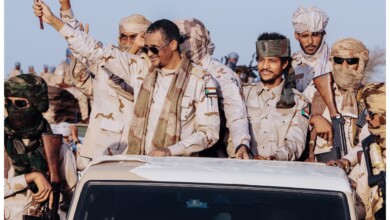
ISIL weapons in West Africa… Made in Sudan
In light of the significant expansion -in terms of influence- the Muslim Brotherhood enjoys within Sudanese territory, the terrorist organization “ISIL/Da’esh” managed to secure a more suitable environment for movement, to the point of encompassing investment and the manufacture of weapons within the country torn apart by wars, for more than three years.
A recently issued UN report, a copy of which was reviewed by (Al-Ain News), revealed valuable information regarding the activity of “ISIL/Da’esh” in Sudan, which has reached the level of arms manufacturing.
Furthermore, a report submitted to the UN Security Council (UNSC) by a team of experts concerned with counter-terrorism this August stated that “A group of young men attempted to travel from Sudan to Somalia to join ISIL, however, counter-terrorism operations discouraged their efforts.”
Growing “ISIL/Da’esh” Activity
Even though the aforementioned report failed to clarify the fate of the young men in question, its worth noting that a previous report, published last year, by the same team had indicated monitoring attempts by “ISIL/Da’esh” to reshape its presence in North Africa through recruiting militants, training them in Sudan and Somalia, and then redeploying them.
Apparently, the activities carried out by “ISIL/Da’esh” in Sudan had developed to the point of encouraging the organization to invest in the wartorn country, where the war’s engulfing flames are meticulously fueled by the Muslim Brotherhood. The UN report shared that the authorities arrested 10 individuals “linked to ISIL and involved in financial schemes, which included local investments in the field of agriculture.”
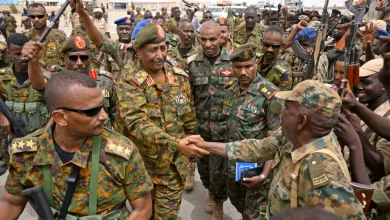
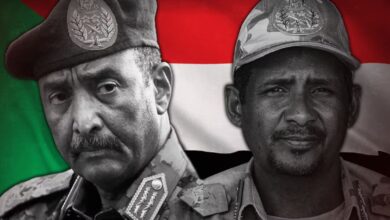
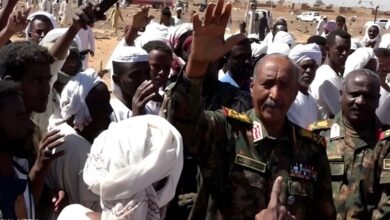
For its part, the Sudanese Armed Forces (SAF) has long developed a strategic relationship with the Muslim Brotherhood, and refuses to end the war, driven by the Organization’s desires, as both insist on cementing their role in the country’s political future, according to experts.
As a matter of fact, it seemed that the rise of extremists in the political and military decision-making structure in Port Sudan allowed “ISIL/Da’esh” to secure a foothold in a highly volatile security environment.
International Concerns
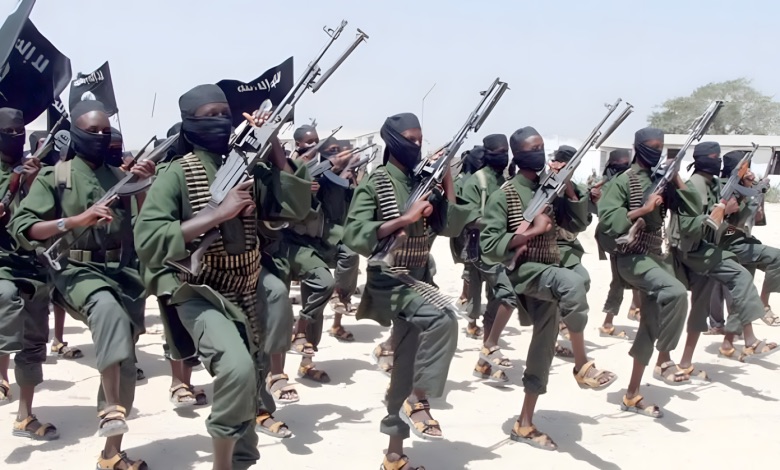
The aforementioned reality serves to confirm what was reported by the United Nations Group of Experts, which believed that “Assault rifles manufactured in Sudan appeared in ISL’s propaganda in West Africa.”
The team expressed “concerns regarding the proliferation of weapons in the Sahel region through criminal networks” in Sudan.
The report further highlighted the danger posed by ISIL’s very existence in West Africa, noting that it constituted a “growing danger in the region.”
The experts went on to estimate that the number of its members is approximately two thousand individuals (2,000), noting that it had “greatly increased its operational capabilities.”
This particular report highlightes the danger posed by the state of security fluidity witnessed in Sudan to the neighboring African territory, as it indicated that (Niger) remained the main area of operations for “ISIL/Da’esh” in the Greater Sahara (ISGS).
In addition, the report suggested that further cooperation between the two branches of “ISIL/Da’esh” in West Africa and the Greater Sahara is a likely possibility, even though the former remains “the most active branch of the organization.”
Furthermore, the United Nations Group of Experts indicated that in mid-February, “ISIL/Da’esh” in West Africa obtained approximately (35 drones), some of which were used in operations in various parts of the Sahel and Lake Chad regions.
The MB, The Nucleus of “ISIL/Da’esh”
Maher Farghali, a researcher on extremist movements, stated in an interview with (Al-Ain News) that ISIL existed within Sudanese territory as early as (2012), pointing out that the beginning of its activity was in Sinnar state, in the western part of the country.
He explained that members of the first ISIL cell uncovered in Sudan that year were sons of the leaders of the Islamic Movement (the Muslim Brotherhood’s front), noting that the Islamists intervened to save their families by forming an intellectual review committee that concluded that the detainees had abandoned extremism, and were subsequently released.
According to Maher Farghali, ISIL in Sudan is led by a person nicknamed “Abu Bakr Al-Iraqi,” and he runs a group of companies in Africa.
He further explained that the experienced state of security fluidity resulting from the ongoing war in Sudan created a fertile environment for “ISIL/Da’esh,” adding that last year ISIL called on its members to reposition in Sudan, in a public message released through its platforms.
The researcher concluded his remarks by sharing that he believes ISIL’s presence in Sudan comes within a broader strategy adopted by the organization, aiming to approach the sea and strategic shipping lanes in the region.