The Brotherhood Fronts: SAF’s Latest Maneuver to Obstruct a Settlement
As per usual, regional and international efforts to launch a political process aiming to end the war in Sudan are confronted with a new obstacle.
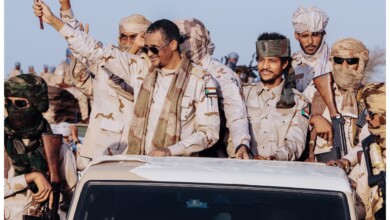
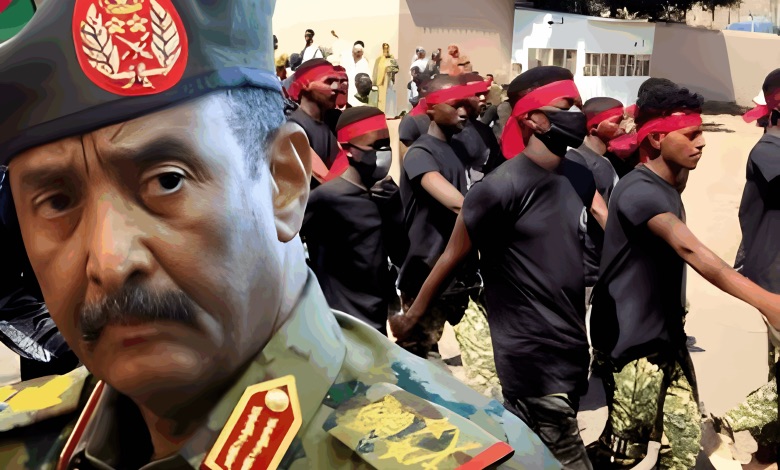
The Sudanese Armed Forces (SAF), which holds the reins of power in Port Sudan, has decided to resort to a new maneuver by utilizing “the Islamic Movement Fronts,” the Muslim Brotherhood’s arm in Sudan, in an effort to obstruct the achievement of peaceful solution, according to experts.
These developments aim to reproduce the influence of the Islamic Movement within the political landscape, which, in turn, threatens the opportunities for achieving peace and ending the war that has raged since (April 2023).
Civilian Boycott
The afore referenced attempts emerged in conjunction with the exploratory consultations held by the Quintet Mechanism (the United Nations, the Arab League, the African Union, the European Union, and the Intergovernmental Authority on Development “IGAD”) in the Ethiopian capital, Addis Ababa, on July 27th, with the aim of reaching a consensus in regards to the formation of a preparatory committee to design a political process to end the conflict in Sudan.
However, the meetings were boycotted by several prominent civilian forces, who justified their stance by citing “Attempts to inundate the political process with political figures affiliated with the National Congress Party and the Islamic Movement (the Muslim Brotherhood’s arm), thus rendering any future settlement meaningless.”
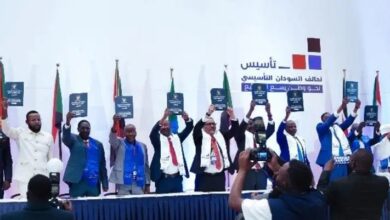
The most prominent boycotting forces included: the Sudanese Forces signatory to the Declaration of Principles, the Civil Democratic Alliance of Revolutionary Forces “Sumoud,” and the Sudan Founding Alliance “Tasis.”
The aforementioned forces expressed reservations about “The structure of the political process and the disregard for previously raised concerns” regarding the June meeting.
The Muslim Brotherhood Fronts
The civilian forces further affirmed their rejection of “The Sudanese Army’s attempts to inundate the political process with figures affiliated with the National Congress Party and the Islamic Movement (Muslim Brotherhood).” They believed that “The presence of such political figures in any political settlement project is tantamount to equating those who ignited the ongoing war with the forces striving for democratic transformation.”
They went on to emphasize their rejection of any measures that could potentially contribute to “Rewarding elements of the ousted regime and assisting the current military leadership in consolidating its power, which, in turn, makes boycotting a principled stance against paving the way for the return of the ousted regime.”
Furthermore, the forces stressed the need for the political process to be Sudanese, with national forces taking charge of formulating the agenda, identifying the parties, and assigning the appropriate place and time for the dialogue.
Rejecting the Approach
Urwa Al-Sadiq, a leader in Sudan’s National Umma Party (NUP), told Al-Ain News that boycotting the meetings does not necessarily reflect a rejection of the idea of international mediation, but rather an objection to the approach adopted in terms of managing the preparations.
He emphasized the rejection of “Attempts to reproduce the crisis by expanding participation to include figures and/or fronts linked to the dissolved NCP and the architects of the October 25th, 2021 coup, under seemingly consensual headlines -while in essence carrying out a project to rehabilitate the forces that led the country into war.”
The leader in Sudan’s (NUP) further affirmed that the core of the Sudanese crisis transcends the dissolved National Congress Party itself, extending to encompass a political, security, and administrative network affiliated with the Muslim Brotherhood that was formed over a number of years and then gradually regained its presence within State institutions following the 2021 coup.
He added that “This network views any political process as an opportunity to restore legitimacy while maintaining the balance of power imposed by the war. Therefore, it deals with peace as a means of repositioning itself, not as an entry point for a genuine democratic transition.”
Thwarting Peace Efforts
For his part, Urwa Al-Sadiq went on to reiterate that “Appeasing the de facto authority in Port Sudan by expanding platforms, and including figures as well as entities operating within the political and organizational sphere of the dissolved Party and the Islamic Movement are, in hindsight, counterproductive measures, for both serve to reduce negotiations to an arena for obstructing any progress.”
He stressed that sustainable peace requires a platform with clear criteria, starting with a cessation of hostilities, the protection of civilians, the restoration of civilian rule, and the independence of national decision-making.
He further emphasized the necessity of distinguishing between forces committed to democratic transformation and those utilizing the State and the ongoing war as mere tools to regain influence, noting that equating the two places the victim and perpetrator on the same level and undermines any political process’s ability to build trust.
“The biggest mistake mediation mechanisms can make is reducing the crisis to simply gathering the largest possible number of participants in one room, because Sudan does not need a crowded platform, but rather a political process with clear criteria that define who is committed to ending the war and who continues to profit from it,” according to Urwa.
He pointed out that “A settlement that grants those obstructing peace the right to veto the country’s future and rewards them for their crimes will not end the war, but will merely postpone its eruption into a new, more intense round.”
Flooding the Political Process
For his part, the Sudanese Political Analyst, Al-Najmi Othman stated that “Flooding the political process with fronts and elements affiliated with the terrorist Islamic Movement merely complicates the path to achieving a political solution and cannot be considered an attempt to achieve national consensus amongst the Sudanese factions.”
Othman added to Al-Ain News: “The Muslim Brotherhood fronts, rushing to participate in the meetings held by the Quintet mechanism, are the root of the Sudanese crisis, since they chose to support the former regime, and then the coup carried out by SAF’s Commander-in-Chief, Abdel Fattah Al-Burhan against the civilian government in (October 2021), in addition to their support for the continuation of the war.”
He added: “It was far from surprising that the anti-war civilian forces rejected the inclusion of these fronts in the proposed political process,” noting that “accepting these fronts in any future political process aimed at ending the war is a crime.”
Al-Najmi went on to stress that “The Brotherhood organization, which has infiltrated the military establishment and security apparatus, seeks to restore its power no matter what it costs them,” reiterating that “The adoption of such an approach by the Brotherhood has long been exposed, whether through betting on military resolution, or through circumventing the efforts to achieve a solution by adopting a plot to flood the political process with their multiple fronts, believing that such actions will assist them in controlling and dominating its potential results, and thus cementing their spot in the political scene.”