Prompting International Warning… Port Sudan Grants the IRGC a Foothold on the Red Sea
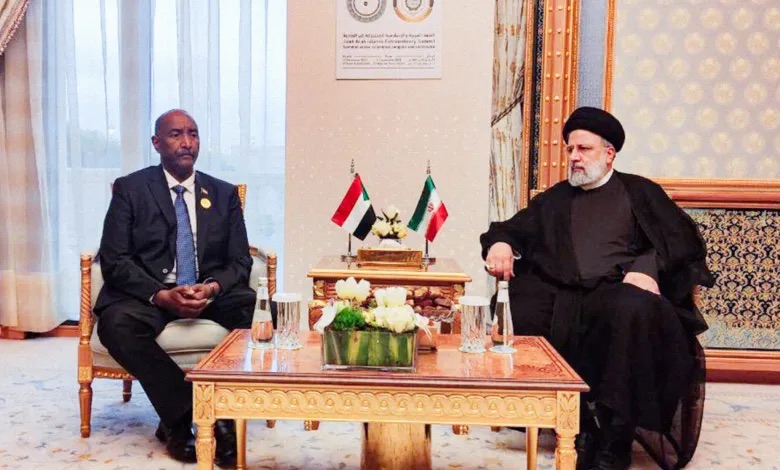
Recently, an international report has warned of escalating Iranian infiltration in Sudan, indicating that Tehran has reduced the African nation to no more than a logistical hub for its influence, in a dangerous development that threatens the security of the Red Sea.
The report, published by the American magazine (Diplomat), pointed out that this threat manifests itself in smuggling, arming, and support networks for the “Houthi” militia, exploiting Sudan’s fragility, which makes Asian economies the most vulnerable to the repercussions of any new instability.
Furthermore, the report, published by the afore referenced magazine -specializing in strategic and geopolitical affairs, argued that the international monitoring mechanisms’ incompetence allowed Iran an opportunity to consolidate its presence and expose global shipping, especially Asian-European trade, to increasing risks.
Container lines began testing a return to the Suez Route in early (2026), with the first Asia to Europe services shifting back to Red Sea sailings from mid-February, contingent on the stabilization of the security situation.
The American magazine further emphasized that the current danger lies not in using Port Sudan as a launching point for direct Iranian attacks, but rather, in its role as a hub for transporting, resupplying, and hosting military vessels.
The report noted that the government of Khartoum would not risk turning its port into a battleground because it represents a lifeline for its survival. However, it warned that the Yemeni experience has demonstrated that supply centers can later be reduced to platforms that represent threats.
According to the report, at the latitude of Port Sudan, the main shipping lane runs roughly (150 kilometers) offshore, within range of military systems exported by Iran. In simplified terms, any threat from the Sudanese coast would easily extend to the northern part of the Red Sea, which shipping companies consider safer. Naturally, the aforementioned could potentially lead insurance companies to refrain from reopening this route.
In addition, the Diplomat’s report shared that the afore referenced concerns are particularly significant given Sudan’s geographical location on the Red Sea. For its coastline lies north of Bab el-Mandeb Strait, specifically along the waterway that ships enter once they have passed the Yemeni threat zone.
The published report went on to affirm that the Iranian supply relationship in question is documented, not merely inferred. As Tehran and Khartoum restored diplomatic relations in (October 2023), and in (April 2026) the United States Department of Justice charged an Iranian national in Los Angeles with brokering it.
The deal involved a contract worth more than seventy million dollars for “Mohajer-6” drones from Iran’s Defense Ministry to the Sudanese Armed Forces (SAF), a letter of intent to the Iranian Islamic Revolutionary Guard Corps (IRGC) for bomb fuses, and payments routed through a company.
The magazine noted that, in regards to the supply chain, the traffic runs both ways, which is where the monitoring case becomes concrete. The United Nations Panel of Experts on Yemen has documented a smuggling network operating between Yemeni and Sudanese territory since (2023).
Its final report, issued in (October 2025), describes the Houthis as the principal controllers of regional smuggling as interdiction tightened in the Arabian Sea
Based on these reports, Analysts at the Italian Institute for International Political Studies, drawing on that reporting, identify a route between Port Sudan and “Al Salif” in “Hodeidah” governorate, for weapons and personnel.
The Institute’s observers noted that the Yemeni Coast Guard interceptions of shipments out of Sudan during (2025). Their own assessment is that indications of cooperation are growing whilst conclusive evidence lags. Hence, that gap is the crux of the issue.