Recent appearance reinforces accusations against the MB of exploiting schools and the Sudanese war
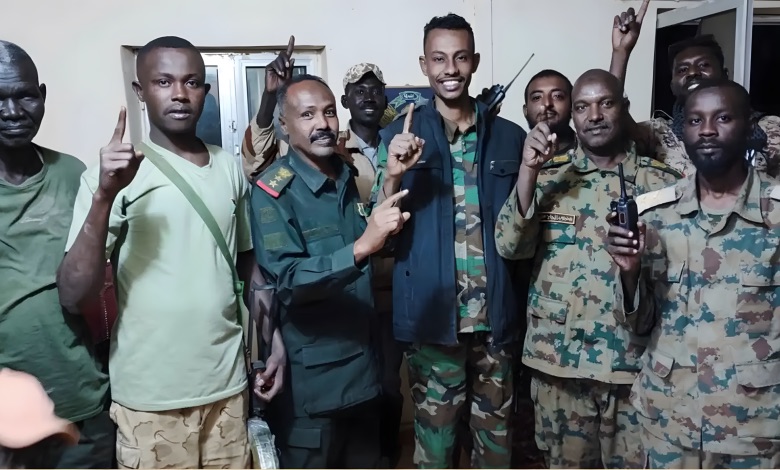
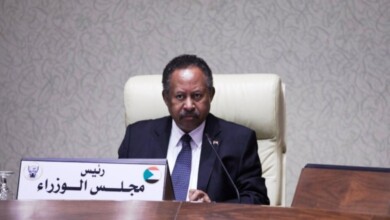
The recent appearance of a leader in “Al BaraaIbn Malik Brigade” -which was designated as a terrorist group- in a video circulating on social media, has served to reinforce accusations against the Muslim Brotherhood (MB) of exploiting the ongoing war in Sudan in an attempt to return to power after being overthrown in the (April 2019) revolution.
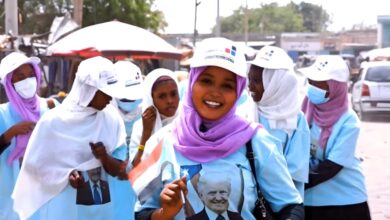
According to activists who shared the video, the leader was addressing students within a school’s premises. This particular development took place amidst escalating warnings about the looming dangers that threaten the future of millions of children in Sudan, as Al Baraa Brigade —the armed wing of the Muslim Brotherhood— continues to infiltrate schools, which, naturally, fueledaccusations of exploiting the educational environment for mobilization and recruitment.
According to the Sudanese National Observatory for Human Rights (SNOHR), leaders in Al-Baraa Brigade have been moving freely within schools, targeting vulnerable children and students. The Observatory further called for an end to the blatant exploitation of educational institutions, as the latter were rendered to no more than arenas for recruitment or political mobilization.
Al-Baraa Brigade’s Infiltrating Influence
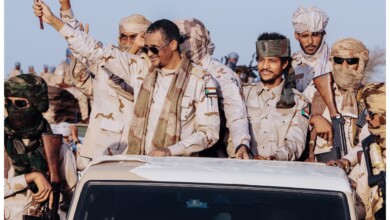
Throughout the recent period, Al-BaraaBrigade has managed to achieve a significant feat in terms of infiltrating schools, which, in turn fueled growing concerns about the brigade’s role as one of the most prominent Muslim Brotherhood-affiliated groups supporting the Sudanese Armed Forces (SAF) during the fighting in Khartoum as well as in other parts of the country.
In March, the United States designated the brigade a “Foreign Terrorist Organization” and subsequently imposed sanctions, accusing it of fueling the conflict and maintaining ties with Iran.
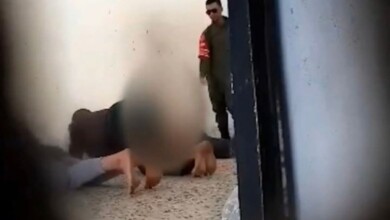
Concerns regarding the brigade’s influence on school students have rather intensified following numerous visits its commander, Almubah Abu Zaid Talha, made to several schools. During these visits, he addressed students with slogans calling for mobilization and glorifying war. Furthermore, he appeared in a video honoring a high-achieving student by presenting her with the brigade’s emblem, even though the brigade is accused of committing serious human rights abuses, including beheadings and disembowelingdefenseless victims.
During his frequent visits to schools, the brigade commander makes a point of displaying slogans that incite students to join the fight. Hence, observers believe this approach is reminiscent of policies pursued by the Muslim Brotherhood during the 1990s, when they sent thousands of students to the battlefields of the civil war that culminated in the secession of South Sudan in (2011).
Infiltrating Schools
Since coming to power in (1989), the Islamic Movement in Sudan has focused on infiltrating schools and universities, in an effort to dominate the administrations of educational institutions and student unions, transforming them into platforms for recruiting members. They have also tightened their grip on the curriculum.
Dr. Hassan Abdel-Mawla, an educational expert, told (Sky News Arabia) that: “Schools are not arenas for propaganda or mobilization, and they ought to remain free from any religious, ideological, political, or military exploitation. As involving students in these discourses constitutes an attack on the neutrality of education, undermines the school’s role in building critical thinking and civic values, and exposes children to the dangers of polarization and extremism instead of proper education and upbringing.”
Dr. Abdel-Mawla further added that: “Protecting schools from any religious, ideological, political, or military exploitation isn’t limited to being an educational issue; it constitutes a national and legal responsibility, and a fundamental condition for preserving children’s right to a safe education, independent of conflict and polarization.”
The Recruitment Campaigns
The Sudanese National Observatory for Human Rights further documented systematic campaigns to recruit schoolchildren by a battalion fighting alongside the Sudanese Armed Forces.
Human rights activists believe such practices reflect a blatant violation of international laws, which further complicates accountability efforts and increases the potential risk of more violations against civilians.
Naturally, international laws and conventions criminalize the recruitment and use of children in armed conflicts. The Convention on the Rights of the Child and its Optional Protocols prohibit the involvement of children in hostilities, and Rule (136) of the International Committee of the Red Cross (ICRC) rules absolutely prohibits the recruitment of children by armed forces or groups.
For his part, Al-Moez Hadra, a lawyer and legal expert, asserted that the recruitment of children by Al-Baraa Brigade and other armed groups constitutes a grave crime under International Law and the 1989 Convention on the Rights of the Child.
Hadra further explained to (Sky News Arabia) that, “The Convention explicitly prohibits the involvement of children in hostilities or their recruitment, considering it a serious violation of children’s rights and International Humanitarian Law.”
The aforementioned developments serve to highlight growing concerns in regards to the exploitation of educational institutions in the Sudanese conflict, amidst warnings that turning schools into platforms for religious, ideological, and military mobilization threatens an entire generation and undermines the role of education as one of the most important pillars of peace and stability in the post-war period.