Bribery, Forgery, and Embezzlement Allegations Against 90 Judges
Investments Exceeding 16 Trillion Sudanese Pounds
Rehab Mubarak Sayed Ahmed, Lawyer and Human Rights Advocate
Investigative Report
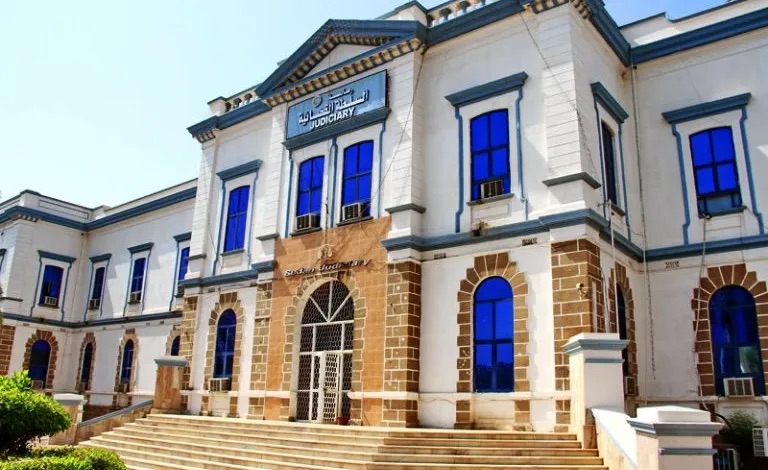
In a new report, numbered (8) in the “Black File” series, the Lawyer and Human Rights Advocate, Rehab Mubarak Sayed Ahmed uncovered controversial details about what she described as “rampant corruption within the Sudanese Judiciary.” For she accused dozens of judges of bribery, forgery, and embezzlement of public funds, all acting with impunity -taking advantage of the notable lack of oversight and accountability.
The report further indicates that the Sudanese Judicial system is experiencing an unprecedented level of corruption, even amongst judges themselves. Which, in turn, has effectively eroded the standards of justice, with judges committing crimes against Sudanese citizens with no fear of accountability, according to the source. The year of (2023), in particular, witnessed a disturbing and alarming spread of this phenomenon, with the number of judges suspended from their duties due to charges of bribery, forgery, and financial irregularities reaching ninety (90). Hence, the report suggests that the prevalence of such crimes amongst judges is far from coincidental, given their impoverishment as their funds were stolen. Which prompted a number of judges -who failed to bear this immense hardship- to succumb to the allure of illicit wealth, resorting to bribery, forgery, and the misappropriation of public funds simply to survive. Meanwhile, those who remain committed to integrity and honesty endure dire financial circumstances, relying on meager judicial stipends that are insufficient even for basic necessities, as the previous report indicated.
Furthermore, the report revealed several specific examples of the aforementioned crimes, ranging from organized networks and forged court rulings to financial irregularities. For in the court of Omdurman, in “Karrari,” a network was established involving a judge and a court employee who embezzled funds from members of the Rapid Support Forces (RSF), whether individuals or companies, using forged court rulings. After the rulings were executed, the judge would order the money to be withdrawn from the relevant bank, and the proceeds would then be distributed between the judge, the court employee, and others who assisted in completing the operation. Millions of Sudanese pounds were withdrawn in this manner before the pattern was recently discovered, leading to an investigation.
In relation to the White Nile state Court of Appeal, located in “Kosti,” the report leveled accusations against two judges, stating that they conspired to alter prison sentences issued against drug traffickers to fines in exchange for bribes. The two judges were later suspended pending investigation.
Moreover, in the River Nile and Al-Jazeera states, the report detailed similar forgery crimes involving final sentencing forms, whereby sentences were altered from imprisonment to fines in exchange for bribes received by the judges.
In addition, the report indicated that some courts have sentenced defendants accused of collaborating with the Rapid Support Forces to hefty fines in municipal, urban, and rural courts, then transferred these funds to Omdurman court —a clear violation aimed at diverting a portion of the money, similar to what occurred previously in public order courts. The report detailed cases of land fraud in “Bahri,” currently under investigation, as well as the misappropriation of public funds through the collection of municipal court revenues by department heads without oversight. These funds are then spent on personal use, with administrative approvals issued without any proper documentation, and the money is transferred through the “Bankak” application.
In the second part of the report, the Lawyer, Rehab Mubarak focused on serious accusations she leveled against Judge Malik Bakri, head of the Services Department. She accused him of seizing all assets and farms belonging to the Judiciary and placing them under his decentralized control. This followed his investment, as mentioned in previous reports, in three gold mines in the Red Sea, River Nile, and Northern states, with investments totaling sixteen trillion Sudanese pounds (16 trillion). The judges of the Judiciary were deprived of the revenue from these assets, despite the aforementioned being their property, and no services were provided to them from these mines, even though the money belonged to them originally.
The report further alleged that Judge Malik Bakri misappropriated two trillion Sudanese pounds (2 trillion) from the Documentation Department funds, which he received from Judge Osama Othman and failed to return -despite the latter’s repeated demands. The report indicated that the Review Committee formed to examine the efforts of the Services Committee was suspended due to pressure and protests from Judge Malik Bakri himself. For he emphasized that the Services Department’s investments are managed centrally, without proper documentation, auditing, or oversight from relevant authorities or the Auditor General’s Office, resulting in a complete lack of transparency and accountability.
The report reviewed Judge Malik Bakri’s investments of Judicial assets, which included importing solar panels, an oil factory in “Khashm Al Quirba,” a sausage and burger factory in “Atbara,” and mining in three gold mines. According to the report, to manage these investments, more than thirty-seven (37) judges were reassigned to the Services Department, depriving the courts of their expertise and judicial work. They were replaced in the courts by judges with limited legal experience, most of whom were described as “Sharia Scholars” who had studied only Sharia Law at their universities and were now adjudicating civil and criminal cases without proper knowledge.
The information detailed throughout the referenced report, if verified, raises serious questions about the integrity and efficiency of the Sudanese Judiciary and its ability to fulfill its role as an entity tasked with protecting rights and freedoms, especially given the country’s numerous current crises. A formal and transparent judicial investigation remains the only path to uncovering the truth behind such serious accusations and holding those responsible accountable, especially given the absence of any official response from the Judicial Authorities to the afore referenced allegations.