The US condemns the Sudanese Army’s targeting of vital humanitarian lifeline
Recently, the United States of America condemned the Sudanese Armed Forces’ inhumane act of bombing the vital “Ardamata”Bridge in West Darfur, emphasizing that the bridge represents a crucial route for delivering humanitarian aid and relief supplies to millions affected by the conflict in Sudan. The US Department of State’s Bureau of African Affairs shared that all parties to the conflict ought to accept a humanitarian truce in an effort to allow aid to reach millions of Sudanese in need, stressing that there is no military solution to the ongoing war and that humanitarian as well as civilian infrastructure should not -under any circumstances- be targeted.
Last Tuesday, the Sudanese Armed Forces (SAF) targeted the “Ardamata” Bridge with a drone, effectively bombing the bridge, which represents a vital corridor for transporting aid as well as humanitarian supplies to large parts of the Darfur and Kordofan regions.
In the same context, the United Nations promptly warned of the serious humanitarian consequences of targeting the aforementioned bridge.
The Deputy Spokesperson for the UN Secretary-General, Farhan Haq, stated that humanitarian partners are warning that the escalating attacks on civilian infrastructure in Sudan, including key roads and bridges, threaten to disrupt the delivery of humanitarian aid to war-affected areas.
He further explained that the bombing of the “Ardamata”Bridge impedes the flow of humanitarian aid through one of the most important logistical corridors leading to the Darfur region. He pointed out that the route linking El-Geneina and Zalingei is vital for transporting aid from Chad to the states of Darfur and Kordofan as well.
The Deputy Spokesperson added that damage to the bridge threatens to slow down or disrupt the delivery of food and medicine to millions in need. Furthermore, he reiterated the United Nations’ call on all parties to the conflict to protect civilians as well as civilian infrastructure, and to facilitate rapid, safe, unhindered and sustained humanitarian access.
The United Nations Office for the Coordination of Humanitarian Affairs (OCHA) confirmed that the “Ardamata” Bridge is a key route for transporting humanitarian aid from Chad to the states of Darfur and Kordofan. Moreover, the bridge is simply the most important crossing point for humanitarian aid and relief coming from abroad through Chadian territory, as it connects El-Geneina to the border regions with Chad.
In consequence, the afore referenced bombing of the bridge sparked widespread condemnation from Sudanese human rights organizations and political and civil society groups, for they believed it to be an attempt to obstruct the flow of humanitarian aid to millions of innocent civilians affected by the ongoing war in Darfur and South Kordofan. The United Nations classifies these regions as amongst the most in need of humanitarian assistance in Sudan due to continuous clashes compound with deteriorating economic and living conditions.
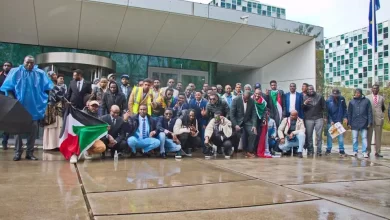
Furthermore, the Sudanese Alliance for Rights (SAR) condemned the destruction of the “Ardamata” Bridge, deeming it a violation of International Humanitarian Law. The Alliance emphasized that targeting the bridge undermines humanitarian relief efforts in Darfur, which, prompted (SAR) to call for an independent investigation and accountability for those responsible for the attack.
The bridge’s importance reflects the scale of the escalating humanitarian crisis in Sudan. As according to the latest Integrated Food Security Phase Classification (IPC) analysis, published in mid-May, approximately (19.5 million people —i.e, 2 out of every 5 Sudanese— face acute levels of food insecurity.
Amongst the afore referenced population, approximately (135,000 individuals) face catastrophic conditions that put them at risk of famine, particularly in (14) conflict zones in Darfur and South Kordofan states. In a similar context , more than (5 million people) are classified as being in the emergency food crisis phase, whilst approximately (14 million) suffer at crisis levels, with conditions expected to worsen between June and September, a period that typically sees increased food pressures and difficulties in humanitarian access.
The recently voiced US position comes after the US House Foreign Affairs Committee approved a new bill on Sudan last Wednesday, which included a broad range of political and punitive measures, most notably of which is targeting those who obstruct or prevent humanitarian aid from reaching civilians affected by the war.
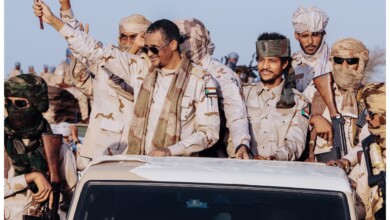
Reports from the United Nations and international aid organizations indicate that the ongoing fighting between the Sudanese Army and the Rapid Support Forces (RSF) is the primary driver behind the worsening humanitarian crisis in the country.
Since April 2023, Sudan has been embroiled in a bloody war between the Sudanese Army and the Rapid Support Forces, resulting in tens of thousands of deaths and millions of displaced persons as well as refugees, amidst a humanitarian crisis described by the United Nations as the worst in the world.