Experts: Al Burhan’s military decisions exacerbate the War and the Sudanese people’s suffering
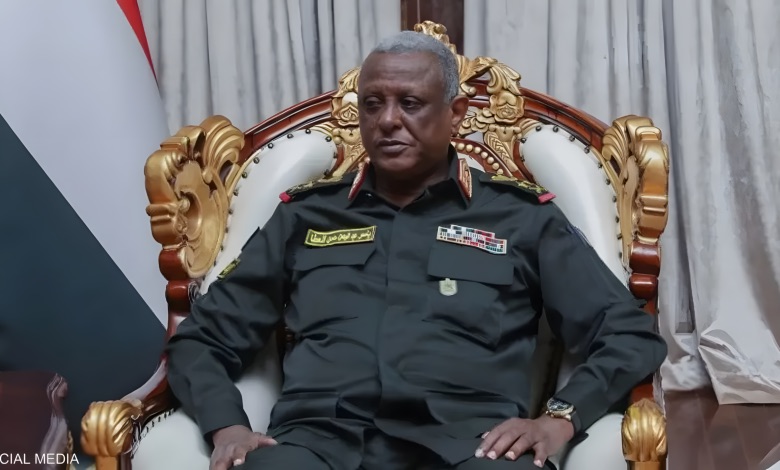
The plan adopted to restructure the military leadership in Port Sudan -naturally- raises questions regarding its political and military implications, especially its timing, as it takes place amidst blatant efforts of escalation on the ground. Furthermore, the aforementioned reality comes compound with indications of intentions to move towards open escalation led by the Muslim Brotherhood, particularly with the appointment of Yasser Al-Atta, a figure close to them, and the dismissal of Shams el-Din Al-Kabbashi, a signatory to the Manama peace initiatives.
Sudanese politicians believe that Abdel Fattah Al-Burhan’s decision transcends organizational considerations and reflects a tendency to consolidate power and circumvent imposed sanctions. As the politicians were quick to point out that the appointment of Yasser Al-Atta serves to confirm Al-Burhan’s inability to eliminate the Islamists, regardless of his attempts to suggest otherwise.
The announcement, which came mere days prior to the third Berlin Conference, reflects a rejection of all peace initiatives and a veiled declaration of military escalation, the outlines of which will become clearer in the near future. It further suggests that the war will continue according to the logic of the Muslim Brotherhood in Sudan.
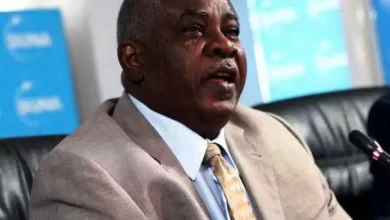
In this context, Shihab Saeed, the official spokesperson for the Sudan National Alliance Party, stated that the recent efforts of restructuring the Port Sudan leadership will clearly be followed by the declaration of Abdel Fattah Al-Burhan as the de facto head of the Port Sudan Authority. He considered this a significant shift, as it would plunge the country deeper into the conflict over the legitimacy of the State.
Saeed added to (Erem News) that the most important aspect is the attempt to suggest that Al-Burhan has eliminated the Islamists’ participation and control over the military establishment’s decision-making process. Which, could be interpreted as a circumvention of US sanctions, a claim contradicted by the appointment of General Yasser Al-Atta as Chief of Staff of the Sudanese Armed Forces (SAF), as the general is a key ally of the Islamist factions. Hence, this appointment, Saeed argued, confirms Al-Burhan’s inability to rid himself of the Islamists.
Furthermore, the Party’s official spokesperson explained that the reshuffle represents an attempt to present the international community with a choice: Accept Al-Burhan as the head of State in Sudan by transforming him into a civilian president, but one who will still represent the Islamists, in a similar scenario to that of the ousted President Omar Al-Bashir when he dissolved the Command Council for the Salvation (Inqaz) regime and then rid himself of Hassan Al-Turabi’s group, however, he remained allied with another faction of the Islamists.
For his part, writer and political analyst IhabMadibou stated that Al-Burhan’s recent decisions -at this critical juncture- cannot be viewed as mere administrative procedures, rather, it ought to be regarded as a development that carries profound political and military implications, especially in light of the escalating field operations and increasing international pressure, particularly after the Muslim Brotherhood in Sudan was designated a “Terrorist Organization.”
Madibou added to (Erem News) that Sudan is currently experiencing a war without limits, indicating that such appointments reflect pressure exerted on Al-Burhan by the Muslim Brotherhood. He pointed out that following the appointment of Yasser Al-Atta, numerous publications were issued demanding that the new General Staff, which he represents, be given free rein and calling for the use of lethal force, including internationally prohibited weapons.
According to Madibou, Al-Burhan’s efforts at restructuring the military leadership are linked to three objectives: First, Consolidating control by allowing the Muslim Brotherhood to exert greater influence over military decision-making; Second, Attempting to minimize points of contention within the military establishment, particularly given the existence of two rival factions within the group: Ibrahim Mahmoud faction and Ali Karti-Ahmed Haroun faction.
Furthermore, the writer and political analyst indicated that the third objective is to rehabilitate the image of Al-Atta, who is known amongst the Sudanese people for his lack of discipline and his close ties to the Muslim Brotherhood, especially Al-Baraa Ibn Malik Brigade. He added that Al-Burhan is also seeking to neutralize voices within the military establishment that advocate for de-escalation.
Madibou further emphasized that Al-Burhan has sent an implicit message of continuing the war and defying international resolutions as well as the Quartet’s efforts. Moreover, he seeks, according to Madibou, to transform Port Sudan into a center of decision-making, not merely an alternative capital.
Ihab shared that these decisions could exacerbate the suffering of the Sudanese people as it represents an attempt to restore the military balance in the region, especially given the ongoing international tensions. He believes that Al-Burhan is sending an indirect message of defiance to Washington as part of an effort to reposition himself for negotiations.
In addition, he went on to explain that the aforementioned indicates that the Port Sudan Forces do not consider international pressure to be a sufficient motive for imposing a ceasefire under the current conditions. Therefore, Al-Burhan is seeking to improve his position on the ground prior to any political settlement, at a time when maneuvering is still a possibility, especially with the third Berlin Conference approaching on April 15th.
Madibou concluded his remarks by emphasizing that Al-Burhan’s decision reflects efforts to renege on any possibility of a truce, as well as a reinforcement of the military option, which aligns with the demands of the Muslim Brotherhood. He pointed out that Al-Burhan was pressured, which prompted him to announce these decisions and remove general Shams el-Din Al-Kabbashi, who favors a truce to fighting. He noted that the dispute between Al-Burhan and Yasser Al-Atta has reached a dangerous stage that could manifest in a future escalation on the ground led by the Islamists.