The Iranian Factor and Complexities of Designating the Sudanese Islamists
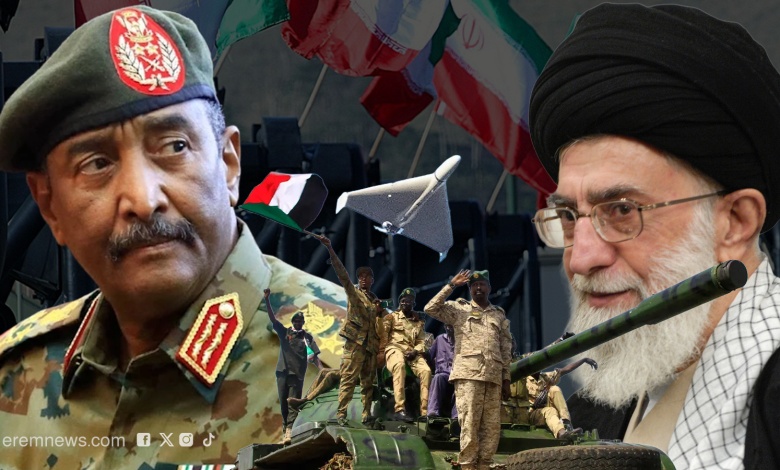
As part of the US Administration’s process of designating branches/chapters of the Muslim Brotherhood (MB) as “Terrorist Organizations,” a decision was issued on March 9th of this year to classify the Sudanese branch/chapter of the group as a Specially Designated Global Terrorist Organization (SDGT). The Iranian factor was hence listed as a motivating factor for terrorist crimes. At which juncture, the importance of examining the context of the US Administration’s decision is essentially underscored, as it cones at a time of war, therefore, its potential impact particularly in relation to the trajectory of US sanctions against Sudan and the interplay between the Islamic Movement and the government.
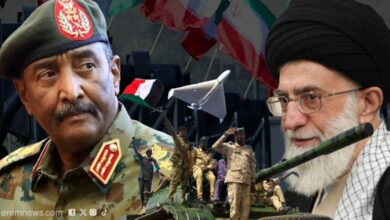
Unconventionally, the US decision was based on two justifications: first, the group’s participation in the civil war through the use of Al-Baraa Ibn Malik Brigade, which employed “excessive violence” against civilians, contributing to the undermining of efforts to resolve the ongoing conflict in Sudan by committing “mass executions of civilians.” Second, the group’s promotion of “Jihadist” ideology, its practice of violence, in addition to its role in carrying out the Iranian strategy within the Islamic Revolutionary Guard Corps’ programs to train and equip Islamist networks. Hence, the decision in regards to the Sudanese Islamic Movement to be “Specially Designated” acquires an additional dimension linked to the threat to US interests in the Middle East, where the Muslim Brotherhood is portrayed as a subsidiary activity of Iranian policy. The aforementioned criteria encapsulates an aspect of the United States’ use of its external conflicts to classify its adversaries. For whilst it chose to link the designation of the branches/chapters in Egypt, Jordan, and Lebanon to their support of Hamas, it accused the Sudanese branch of having political and military ties with Iran. Which, in turn, reflects a complex process linking events in Sudan to the ongoing Gulf War, in a manner that serves to pave the way for the inclusion of other branches/chapters under the category of sympathizing with the Iranian regime. The American objective appears to be preventing Iran’s regional activities from creating a safe haven for the Islamists in Sudan.
In general, this is far from being the first move of its kind against Sudan. The State Department’s decision aligns with a long history of US sanctions against the National Congress regime (Al-Inqaz), beginning with the Sudan Peace Act of 2005, followed by UN Security Council resolutions concerning the conflict in Darfur. And on a more recent note, during the ongoing conflict, sanctions were imposed on the Secretary-General of the Sudanese Islamic Movement, Ali Karti. Subsequently, Executive Order 14098 of (September 2025) designated Al-Baraa Ibn Malik as an armed wing of the group.
Furthermore, within the framework of mutual solidarity, the US policy considered the decision of the Quartet and the US Treasury Department to impose sanctions on “Al-Baraa Ibn Malik” as well as the Finance Minister Jibril Ibrahim, by classifying the “Muslim Brotherhood” as an extremist organization, to be a preliminary step towards placing it on the lists of global terrorism, based on the Quartet’s assessment that the group had rendered Sudan an arena for terrorist activities.
The Sudanese response to the US decision ranged from reservation to welcome. For its part, the Sudanese government, on March 10th, adopted a general stance rejecting all forms of terrorism and violence without specifically mentioning the Muslim Brotherhood. Instead, the government chose to explain its position by emphasizing the necessity of adopting the US policy in relation to all groups that carry out crimes against humanity. Moreover, it went on to call for the Rapid Support Forces to be designated as a terrorist organization for committing war crimes and genocide in several cities. Hence, the adopted official stance appeared to be a compromise, a bargaining chip aimed at maintaining a minimal level of rapprochement with the Islamists.
In general, the statement issued by the Ministry of Foreign Affairs aligns with the Commander-in-Chief of the Sudanese Armed Forces (SAF), Abdel Fattah Al-Burhan’s decision to appoint advisors affiliated with the National Congress Party (NCP). Both the Islamic Movement and the National Congress Party addressed the US State Department’s decision, arguing that there is no formal or substantive basis for the US request place the “Muslim Brotherhood” on the terrorism list. This argument was based on the premise that there is no Movement called the “Muslim Brotherhood” or that the US is targeting the government on behalf of the RSF. This situation allows for a shared desire to maintain the existing social and political support base that fosters the close relationship between the Sudanese Armed Forces and the Islamic Movement.
The decision to designate the Muslim Brotherhood is not without its drawbacks in light of inciting conflicts between the civil and military components, particularly given the fragmentation (and absence) of any authority capable of enforcing the law or imposing a fait accompli throughout the rule of the National Congress Party (Salvation/Inqaz regime). The Sudanese political system remained incapable of providing an alternative social base to the Islamic Movement. Despite the internal divisions that plagued the Brotherhood and its affiliated parties, it remained a close ally of the ruling circle until after the December 2018 revolution. Furthermore, the aforementioned divisions indicates that the Islamists were consistent in terms of opposing the leftist parties and social forces. For disagreements failed to lead to any change in ideology or disengagement from international Islamist networks. The offshoots of the Sudanese Muslim Brotherhood maintained organizational as well as political ties with their counterparts outside Sudan. This is also true of the repercussions of the dispute between Omar Al-Bashir and Hassan Al-Turabi in (December 1999), the subsequent emergence of the Popular Congress Party (PCP), the Sudanese Army’s split in (December 2012), and the National Congress Party’s division into two factions. Such phenomena invokes a dual impact; Whilst it weakens the Movement’s effectiveness, it allows the latter to unite against political opponents. Under these circumstances, the Islamic Movement sought to consolidate its local as well as international networks in an effort to confront leftist parties and the entities affiliated with the Forces of Freedom and Change (FFC), while remaining divided between the Sudanese Army and the Rapid Support Forces. Which, in turn, broadened the concept of “the Muslim Brotherhood” to encompass a wide spectrum that is difficult to define. According to several analyses, including -as referenced by Amin Hassan Omar- the organizational overlap and social dimension that shaped the Islamic Movement in a manner that reflects its widespread presence in the Sudanese political arena.
From a political perspective, the Sudanese issue represents a significant variable amongst the Islamist Movements. For its the only one that remained in power for three decades, during which it managed to shape the State’s authorities and administrative apparatus. This level of infiltration makes it rather difficult to dismiss its political influence. Since the convening of the Popular Arab and Islamic Conference (PAIC in 1992), it has sought to be the center of political Islam activity and has built structural relationships with the Iranian Islamic Revolutionary Guard Corps (IRGC) and Intelligence Service that encompassed military training as well as political support for the Sudanese government. This particular background served as a convergence point between the Salvation (Inqaz) and the Iranian revolutionary experience, explaining the Islamists’ focus on the Iranian situation at the expense of national interests.
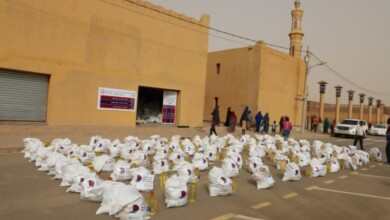
Regarding this context, the Sudanese government finds it difficult to distance itself from its alliance with the Islamists. In the midst of the ongoing war, the Islamic Movement adopted a policy of resistance against the “Freedom and Change” laws aimed at eradicating the Islamists. Initially, in (April 2022), the “Broad Islamic Current” was formed, encompassing Sudanese Islamist groups and the international Muslim Brotherhood organization. This framework served as a transnational alliance to support the Sudanese Army, with its activities appearing on “Tayba” channel. Last December, the group’s branches/chapters abroad launched a second media and relief campaign to support the Sudanese government, under the banner “Together to Support Sudan.” This particular campaign reflected an awareness of the need for a thorough examination of the threats posed by the Rapid Support Forces’ supporters to the government.
The political system in Sudan has remained incapable of providing an alternative social base to the Islamic Movement.
Furthermore, if the features of American policy were to be referenced, one can observe that the decision to designate the Muslim Brotherhood is not without its drawbacks in light of inciting conflicts between the civil and military components, particularly given the fragmentation (and absence) of any authority capable of enforcing the law or imposing a fait accompli. At all levels, the country is experiencing persistent divisions, creating a fertile ground for undermining the judiciary and the proliferation of weapons. It is estimated that the designation is less likely to lead to a cessation of hostilities, but would potentially create new conflicts due to the group’s desire to remain relevant, its ties to external circles.
The Sudanese context illustrates one aspect of the challenges to the effectiveness of the American decision. In general, the results of American sanctions in Sudan and other regions indicate counterproductive outcomes. For they have consistently been associated with political instability and the continued presence of the targeted forces within the political sphere, as they succeed in circumventing the effects of the sanctions and preserving their interests through two policies of infiltration within the State; Exploiting economic backwardness to consolidate power, and capitalizing on the war to form parallel military bodies to the Armed Forces.
Despite the aforementioned advantages and the relative strength of the Muslim Brotherhood, the group faces the burdens of the American decision on several levels. The European Union and the Forces of Freedom and Change (FFC) converge on excluding the group from the political scene and holding it accountable for its time in power. Moreover, the group faces a broad spectrum of countries that support empowering “civilian forces,” restoring the pre-October 2021 status quo, and backing the options of a parallel government.
With the prospect of a political solution diminishing, it can be said that American policy faces two dilemmas in excluding the Islamists: The first is the lack of a project that ensures the Sudanese Army’s continued existence, leaving the primary effort focused on investing in conflict and exclusion. The second is that the United States’ introduction of the Iranian factor links the group’s fate to the outcome of the ongoing Gulf War and its events, not solely to Sudanese factors, thus creating further challenges of instability.