US Think Tank: The Sudanese Army MB affiliates are part of the Iranian resistance axis
A new report by the “Gatestone Institute,” which wields considerable influence on American policymaking, states that videos featuring members of the Muslim Brotherhood (MB) within the Sudanese Armed Forces (SAF) serve to encapsulate the core of Iran’s hostile ideology.
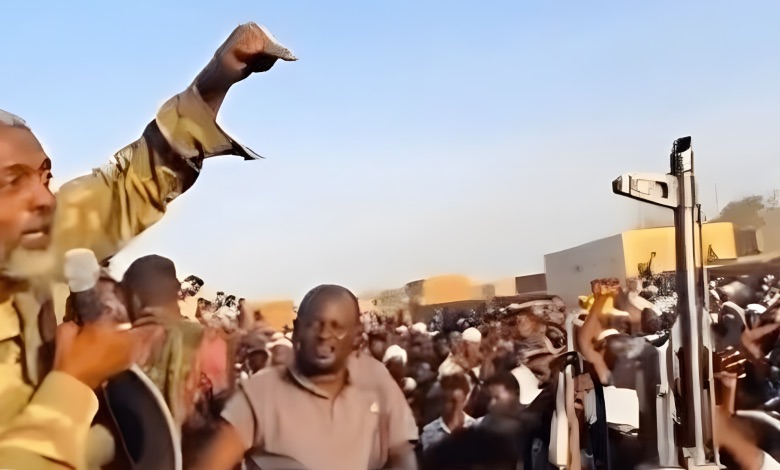
In videos and audio recordings released hours after the start of the US-Israeli military operation in Iran, leaders affiliated with the Brotherhood supported Tehran and called on others to fall in line, moreover, they expressed their readiness to deploy forces from their brigades to confront any US-Israeli ground incursion into Iran.
The aforementioned statements came within the context of a campaign carried out by Brotherhood leaders against the Gulf Arab States, urging parties to align with Iran. This campaign was joined by figures such as Naji Abdullah, Yasser Obaidullah, Naji Mustafa, and Youssef Alam (the Commander of Al-Furqan Brigade).
The report published by “Gatestone Institute” suggests that the Muslim Brotherhood should be the next target in the war on terror after the elimination of the Iranian threat, warning that the ongoing war in Sudan, which broke out in mid-April 2023, is creating fertile ground for the resurgence of Iranian ideology.
Furthermore, the report pointed out that the Muslim Brotherhood and the Iranian regime share a deep hatred of the West and seek to undermine moderate Arab and Islamic States.
The “Gatestone Institute” report observed that the statements made by Muslim Brotherhood leaders allied with the Sudanese Armed Forces in the circulated videos reflect familiar themes within the Iranian regional network: Hostility towards America, the West, and moderate Arab and Gulf States.
In addition, it explained that these statements included calls framed in religious and ideological terms that form the core of what Iran calls the “Axis of Resistance,” a loose network of Movements and militias allied with Tehran’s geopolitical ambitions.
The report concluded that the Muslim Brotherhood is no less dangerous than the Iranian regime, noting that it maintains its presence despite being banned as a terrorist organization in some Arab countries and operates through networks and branches/chapters in Western countries via various organizations, research centers, and charities that promote its ideology.
The Institute stressed the need to adopt effective strategies that aim to stop the organization’s expansion, such as classifying all its branches/chapters as “Terrorist Organizations,” dismantling its financial networks, and limiting its influence in educational and religious institutions.