Armed Men Inside Sudanese Courts: Justice Under Intimidation
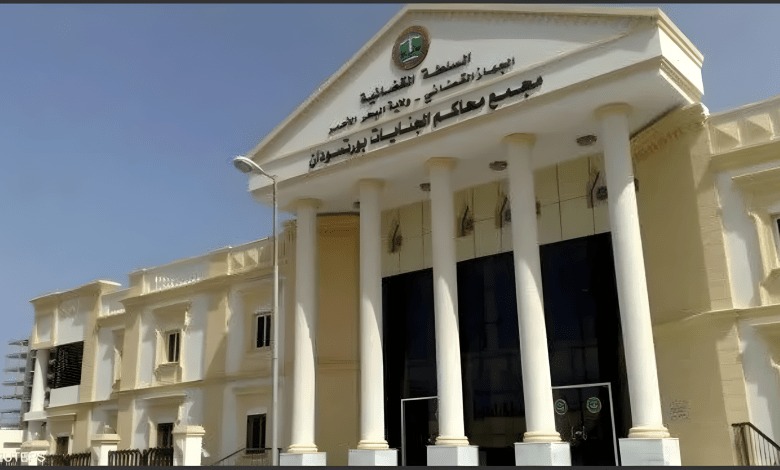
Sentences ranging from the death penalty to lengthy prison terms for thousands of civilians, for reasons that human rights activists believe are linked to regional, ethnic, and political affiliations, along with ongoing trials of civilians opposed to the war, have raised widespread concerns about the politicization of justice. This comes amidst a complete collapse of State institutions due to the war that has been raging since (April 2023).
In Port Sudan, the Administrative Capital of the military rule, thousands of civilians calling for peace and an end to the war are being tried in absentia. Amongst them are Abdalla Hamdok, the head of the Civil Democratic Alliance of Revolutionary Forces (Sumoud), as well as journalists and human rights activists. Meanwhile, hundreds of civil activists languish in prisons across several cities, most on charges related to demanding civilian rule and an end to the war. The aforementioned has fueled valid concerns regarding the collapse and politicization of the justice system.
The United Nations previously warned that the collapse of the justice system in Sudan undermines the protection of civilians’ rights.
Reports from the Emergency Lawyers human rights group and the Human Rights Observatory indicate that the number of civilian detainees in SAF-controlled areas ranges (between 3,000 and 5,000 civilians). These detainees include politicians, Resistance Committee activists, and medical volunteers, in addition to ethnically motivated arrests.
Controversial Verdicts
Human rights organizations believe that following the outbreak of the war in Sudan, courts under the Sudanese Armed Forces’ control have recorded charges against (approximately 80 individuals) for political or ethnic reasons, under the pretext of collaborating with the Rapid Support Forces (RSF). Meanwhile, the Public Prosecutor’s Office reports that (more than 15,000 cases) are currently under investigation.
In recent months, four death sentences have been issued, in addition to life sentences and prison terms of up to ten years, some of which have already been carried out.
Human rights reports have also documented criminal charges against (more than 25 women), some of whom are minors and young women between the ages of (19 and 26 years old), moreover, the accusations could carry the death penalty, on charges of “collaborating” with the (RSF).
Despite denials from Judicial Authorities that the aforementioned cases are politicized, and their insistence that the procedures are based on the Criminal Law and Counter-Terrorism Legislation, local and international human rights organizations maintain that the trials are subject to clear political influence and are taking place within a deeply unbalanced justice system.
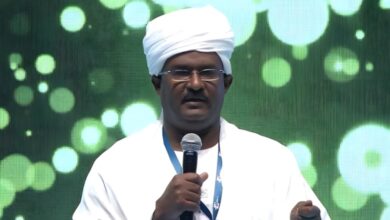
Advisor Kamal Al-Amin shared that such developments represent “a complete elimination of the rule of law,” adding in an interview with (Sky News Arabia): “When armed elements enter courtrooms, and lawyers are prevented from defending their clients, and as militias impose their will, we are witnessing a farce performed in the name of justice, using the language of the law to carry out politically motivated acts of revenge.”
Al-Amin believed that the collapse affects not only the defendants, but the judges as well, for they have become “tools in the hands of the authorities, and mere employees signing off on decisions made in dark rooms, far removed from justice.”
Judicial Flaw
According to a statement signed by hundreds of lawyers, journalists, politicians, diplomats, and professionals, the ongoing trials in more than four cities only serve to highlight “The usurpation and monopolization of State institutions by unqualified entities, who employ the former to achieve their own agenda through terrorism and intimidation of opponents.”
The statement pointed to the presence of armed elements in courtrooms, the barring of human rights activists from attending, and the intimidation of judges as well as lawyers, in clear violation of the principles of a fair trial.
The statement called on the Human Rights Council in Geneva, the UN High Commissioner for Human Rights (UNHCR), and the African Commission on Human and Peoples’ Rights (ACHPR) to intervene urgently in an effort to halt these trials and put an end to the interference of military, militia, and political entities in the judicial system.
The Brotherhood Control
In the same vein, legal expert Moez Hadra warns of the Muslim Brotherhood’s control over the Public Prosecution and the Justice System following the October 2015 coup, which has enabled the implementation of retaliatory trials against political opponents.
According to (Sky News Arabia), Hadra shared: “Since they seized power in 1989, the Brotherhood has manipulated the justice system to their advantage, and validated malicious reports that affected hundreds of civilians. Today, the scene is being repeated through security agencies loyal to the organization.”
He added: “These trials convey a clear message; The justice system is unwilling or unable to deliver justice, which serves as a confirmation of the politicization of the Judiciary.”
Signs of Collapse
What activists describe as signs of the Justice System’s collapse are manifested in politically motivated charges and trials, both in person and in absentia, against more than 60 people.
Furthermore, Lawyers accuse the Military Authorities of using the Judiciary to eliminate all aspects of the revolution that overthrew the Muslim Brotherhood regime in (April 2019).
Lawyer and Activist Nafisa Hajar described these trials as “An end to the concept of justice and collapse of judicial independence,” believing that: “Legal texts are being utilized as tools to carry out politically motivated acts of elimination.”
She added: “The presence of masked and armed individuals in courtrooms confirms that the platform of justice has been humiliated, and that the Judiciary has become subservient to the will of forces that enforce control from behind the scenes.”
Grave Danger
Lee Fong, the representative of UN Human Rights Office in Sudan, warned of a grave danger facing local justice, stressing that the war has weakened the rule of law, justice institutions, in addition to undermining the mechanisms for protecting civilians.
Fong shared that: “We are documenting serious violations of the International Humanitarian Law and Human Rights Law, including summary executions, arbitrary detention, and enforced disappearances.”