Trump’s Decision Turns the Tables: Dismantling the MB places Al Burhan in the Crosshairs of Isolation and Sanctions
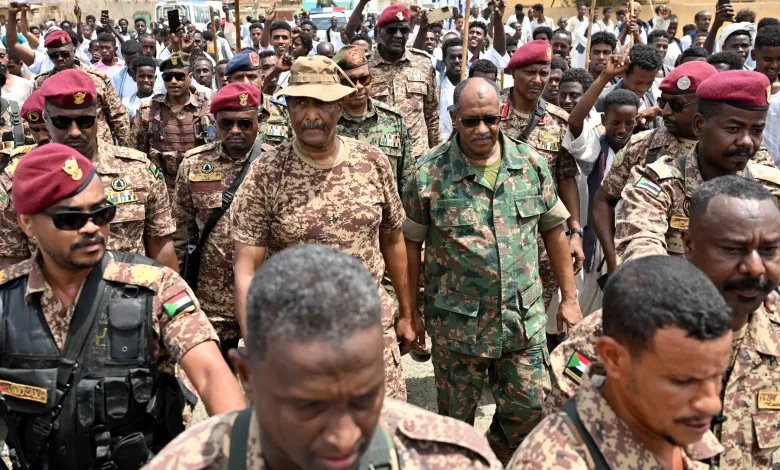
The recent decision issued by the Trump Administration to tighten its grip on branches of the Muslim Brotherhood (MB) in several Arab countries comes as part of a phase characterized by a reset of the political standards governing the relationship between Washington and Political Islam Movements.
A US diplomatic source familiar with the decision’s development explained to (EramNews) that discussions within Washington addressed specific cases where Brotherhood-affiliated groups are linked to military alliances based on managing and expanding conflict. The source further indicated that US assessments had observed, in Sudan during the past period, a direct overlap between local Brotherhood networks known as “Al-Kizan” and the military decision-making center based in Port Sudan, with a practical impact on the course of the war and its options.
The US diplomat stated that the new standards place any religious-ideological structure linked to armed groups under political and financial scrutiny, as the US assessment is based on field realities and patterns of positioning within conflicts.
He continued, sharing, “In the Sudanese case, we have observed over the past period the Islamists’ shift to a position of real influence within the military decision-making apparatus, with a mobilization, media, and organizational role that contributes to the continuation and prolongation of the conflict.”
Furthermore, the source added, the recent decision adopted by the US Administration opens the door to extensive scrutiny of the financing and mediation networks associated with this Movement, moreover, it serves to restruct diplomatic communication channels with any authority that relies on it. He pointed out that “Washington views this structure as a source of leverage in regards to regional stability and is therefore putting forth efforts to reduce its ability to operate within the international financial system.”
The information circulating in Western capitals regarding Sudan indicates that the Islamists (Al-Kizan) have managed to restore their influence through security and economic channels since (2019), with an more influential presence in the current war environment.
The aforementioned presence is linked to a close alliance with the fragile military leadership in Port Sudan.
Hence, this relationship has become a key aspect of military decision-making, with involvement within the administrative apparatus and the parallel economy.
The American source emphasized that “The existing alliance in Port Sudan bears the clear hallmarks of a war-torn State, where military power is intertwined with an ideological current that possesses extensive experience in managing the political economy of conflicts. Such a model has become a source of grave concern within Washington, especially with increasing indications of the use of regional resources and mediation to perpetuate the fighting.”
The Islamists’ Position on Military Decision-Making
The Islamists in Sudan (Al-Kizan) constitute a network of influence that has been formed -painstakingly- within the State over three decades and has managed to reproduce itself after (2019) through security, economic, and military channels.
Following the outbreak of the war, this particular current moved from a state of dormancy to a position of direct influence on decision-making, based on a de facto alliance with the Port Sudan Authorities.
Hence, this particular act of positioning served to make the Islamists part of the war machine, contributing to its political direction and mobilization, with a clear presence in religious and media discourse as well as mobilization networks.
Therefore, American assessments suggest that this positioning places the military leadership in direct confrontation with the ongoing shifts in American policy in regards to political Islam.
The diplomatic source indicated that “Dependence on the Islamist networks restricts the margin for external maneuveringand renders any attempt to obtain broad international support fraught with political and legal complications.”
He added that the current phase is witnessing a redefinition of acceptable partnerships, stating, “Authorities that rely on armed religious-ideological alliances are facing increasing difficulty in building channels of trust with the United States and its allies.”
The American hardening stance toward the Muslim Brotherhood Organization places such an alliance under increasing political pressure. For the decision redefines political Islam as an element that threatens regional stability and closes off venues that some regimes have tried to utilize in an effort to present themselves as acceptable partners despite their reliance on religious-ideological networks.
In the Sudanese case, this impact extends to the Islamists (Al-Kizan) and the military leadership associated with them, as the separation between the two is no longer convincing to international actors.
Restricting Al Burhan’s Power
The aforementioned shift is reflected in the narrowing of informal communication channels, increased scrutiny of financial flows, and growing diplomatic reservations regarding any governing formula based on this alliance, according to Sudanese political sources speaking to (Eram News).
The sources added, “The practical result can be noted in the subsequent erosion of the Port Sudan authority’s external maneuvering room and its diminished ability to market itself as an essential party in any political settlement.”
The US decision effectively places the Port Sudan Authority before a difficult test concerning its position in the international system. For the affiliation to the Islamists (Al-Kizan) places this leadership under direct political responsibility for the course and continuation of the war, according to the sources.
Furthermore, they pointed out that “This affiliation limits the chances of obtaining effective international support and reinforces the perception of the current authority as part of the equation obstructing the political transition process.”
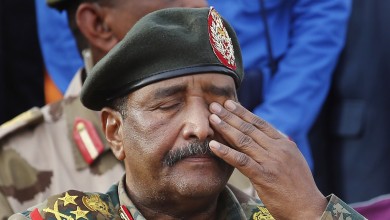
In this climate, the options available to Abdel Fattah Al-Burhan are dwindling, moreover, the pressures related to sanctions, accountability, and restructuring the political process on civilian foundations independent of armed ideological currents are increasing.
The sources added that “The American hardening stance towards the Muslim Brotherhood is putting this alliance under real pressure. The messages reaching Port Sudan indicate escalating political pressure and widespread international reservations about any governing formula based on such a foundation. Hence, the military leadership finds itself facing a difficult equation, as the alliance with the Islamists is transforming from a source of internal strength into a heavy external burden.”
In addition, the Sudanese sources explained that “The Sudanese public interprets these developments as confirmation that the continuation of the war serves specific networks within the deep State,” noting that “The American decision reinforces this perception and provides civilian forces with political support in confronting the wartime authority in Port Sudan.”
Al-Burhan, Beleaguered
The Sudanese Political Analyst, Abdel Rahman Fadlallah believes that the Islamists have treated the war since its early days as an opportunity to restore the influence they lost after the fall of Al-Bashir’s regime.
In an interview with (Eram News), Fadlallahpointed out that Abdel Fattah Al-Burhan has become a pivotal figure in an alliance that provides the Islamists with political protection and grants the military leadership in Port Sudan the tools for mobilization and social control.
Fadlallah went on to point out that this entanglement has thwarted any possibility of ending the war, as the continuation of the fighting -currently- serves a clear network of interests within the deep State.
The Sudanese Analyst stated that Al-Burhan’s alliance with the Islamists has become a key factor in prolonging the war, noting that this particular alliance has provided both sides with what they need: Political cover for the military leadership, and an opportunity for the Islamists to effectively return to power.
He added that the American hardening stance towards the Muslim Brotherhood strikes at the heart of this arrangement, because Al-Burhan is no longer able to separate his military position from the networks he relies on politically, which renders him to a position of increasing isolation and pressures that will be difficult to overcome in the coming period.
He believes that the recent American decision is reshuffling the cards internally, because it reduces this alliance’s room for maneuverexternally and exposes it to escalating political costs.
From his perspective, today, the Islamists face a complex dilemma, represented by an inability to return as an overt political force, in addition to a diminishing capacity to operate behind the scenes due to increased international scrutiny. Consequently, this reality directly impacts Al-Burhan’s position, as he finds himself beleaguered by an alliance that restricts him rather than expands his options.
Narrowing External Outlets
For his part, Thomas Redfield, an American researcher specializing in analyzingtransnational political Islam networks, believes that the recent American shift targets the Muslim Brotherhood by treating them as an operational structure within open conflicts. He points out that Sudan is now viewed differently in Washington because the Islamists are no longer a political actor seeking to adapt, but rather a network of influence operating within the war itself and investing in its continuation.
Redfield adds, in an interview with (EramNews), what worries American policymakers is this Movement’s ability to transform the military establishment into a platform for manipulation, by providing logistical cover and recycling resources and loyalties.
In this context, Abdel Fattah Al-Burhan is viewed as part of a broader operational system, not as a military leader detached from the surrounding ideological context.
Redfield went on to explain that the American strategy now relies on gradually dismantling these networks through financial and political pressure, because their continued existence means the continuation of war as a tool of governance.
From his perspective, the next phase will witness increasing restrictions on any external route passing through Port Sudan, because Washington believes that the continuation of this model threatens the very concept of the State and transforms Sudan into an open arena for regional attrition.