UAE and Sudan: Calm perusal, away from the noise of campaigns

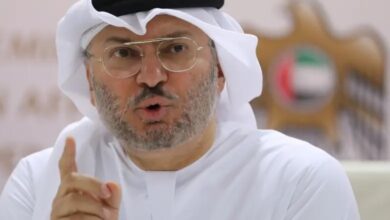
Dr. Anwar Mohammed Gargash
Throughout the recent months, questions were intensely raised in regards to the UAE’s stance on Sudan and regional issues in general, particularly in light of an unprecedented media campaign targeting the country. The campaign is naturally spearheaded by well-known entities, as well as others whose involvement in such a campaign was rather unexpected. The aforementioned uproar necessitates efforts to calmly peruse the Emirati position, in a manner detached from the debate and emotional reactions, through an understanding of the strategic context that has governed the country’s foreign policy in recent years.
Following the year (2018), Emirati foreign policy established a clear phase of transformation, marked by the end of its direct military role within the Arab Coalition led by the Kingdom of Saudi Arabia in Yemen. This development followed an outstandingly pivotal role played by the Emirati forces in crucial battles, from the liberation of Aden to confronting Al-Qaeda in Mukalla and securing the western coast. That particular decade was one of the most complex periods in the region’s history, during which the UAE fully shouldered its responsibilities in confronting widespread chaos that threatened regional security.
With the decline of military operations, the UAE entered a phase that can be described as a geo-economic transformation, where refining economic competitiveness, stability, and investment openness became top priorities. This trend was later reinforced by the COVID-19 pandemic, which underscored its necessity in a rapidly changing world.
Hence, a renewed renaissance phase began with His Highness Sheikh Mohamed bin Zayed Al Nahyan assuming the presidency in (2022), establishing a path based on an active international position, a leading regional economy, a global investment ecosystem, and advanced technological ambitions, particularly in the field of artificial intelligence. Alongside the aforementioned priorities, regional stability remained an integral part of the UAE’s national security equation.
This equation was rather severely tested after (October 7th), with the outbreak of war in Gaza and the subsequent conflicts in Lebanon and Iran. At such a critical juncture, the UAE played a pivotal role in putting forth complex diplomatic efforts aimed at achieving a ceasefire in Gaza, whilst simultaneously being the largest humanitarian supporter of the Palestinian people in Gaza, demonstrating tangible action rather than mere rhetoric.
Therefore, in this turbulent context, the UAE followed developments in Sudan with great concern. As the (2021) coup against the civilian transitional government served as an early warning bell that the international community ignored, despite its grave implications for the country’s future. During that period, the UAE exerted intensive efforts to reconcile the head of the Sovereignty Council, Abdel Fattah Al-Burhan, and the Council’s -then- deputy, Mohamed HamdanDaglo, in an attempt to avert the subsequent military crisis.
Moreover, following the outbreak of the war, it was clear that the Sudanese scene was extremely complex: A military establishment that had been ideologically indoctrinated over three consecutive decades under Al-Bashir’s rule and his alliance with the Muslim Brotherhood, and another armed force that emerged from within the army itself. Such a reality naturally rendered any belief that a military victory for either side to an illusion, a fact borne out by the realities on the ground.
Based on this assessment, the UAE participated in and supported various regional as well as international initiatives aimed at ending the war, from the Jeddah, Bahrain, and Geneva platforms to bilateral contacts. Even though it was evident that decision-making within the Sudanese military establishment remained hostage to narrow ideological calculations, echoing previous Sudanese experiences characterized by a duality of power and ambiguous decision-making.
A particular question is sometimes raised -adopting a perplexed manner- about the UAE’s interest in Sudan, as if the region’s security issue was not interconnected, or as if other regional actors supporting parties to conflict was a legitimate practice, whilst a stance calling for neutrality and a ceasefire is met with skepticism. The UAE’s designation of the Sudanese Armed Forces (SAF) and the Rapid Support Forces (RSF) as parties to the armed conflict was not a biased position, but rather a realistic assessment that prioritizes Sudan’s interests above all other alignments. Furthermore, the aforementioned led to a clear conclusion; that an independent civilian government is the only parh forward.
This concern cannot be separated from the Sudanese collective memory burdened by the experience of the Salvation (Inqaz) regime, which led to a devastating civil war, suffocating international isolation, and the transformation of Sudan into a haven for extremist and terrorist figures. This experience even prompted Sudanese civilian forces to agree on the necessity of removing the Muslim Brotherhood from government and politics.
Perhaps the most significant glimmer of hope in this bleak landscape emerged in (September 2025) with the Quad’s statement (The United States, Saudi Arabia, Egypt, and the United Arab Emirates). As this initiative is the most realistic and serious path out of this devastating civil war, offering a comprehensive proposal that includes a humanitarian truce, guaranteed access for aid amidst an unprecedented humanitarian crisis, and a negotiated path leading to an independent civilian transition within a defined timeframe. However, the rejection of this roadmap by the Sudanese Army and its ideological allies reflects their persistent illusions of a return to military rule, despite Sudan’s history being replete with the overthrow of such regimes in (1964, 1985, and 2019).
Nevertheless, the UAE has continued its political and humanitarian efforts, becoming one of the most prominent supporters of relief efforts in Sudan, confronting one of the world’s worst humanitarian crisis to date. Moreover, our relief efforts shall continue despite the challenges and difficulties.
This war will not be won militarily. What we are witnessing is a balance between the two sides, with thirty militias aligned in each camp, and a war characterized by its brutality, claiming innocent civilian lives. From the Sudanese Army’s use of internationally prohibited chemical weapons to the massacres that took place in Al-Jazeera state, this conflict is simply replicating Sudan’s historical tragedies, nevertheless, the Sudanese people are the sole party bearing the losses of this conflict.
In conclusion, the only path to addressing this tragedy is through a ceasefire, and a return to a political process that leads to civilian rule within a credible timeframe, in addition to national reconciliation based on justice and accountability. The aforementioned steps will surely pave the way for reconstruction and the restoration of Sudan’s standing. For Sudan has paid a heavy price for military rule, the Muslim Brotherhood, and their reckless adventures, thus, it cannot afford to repeat such experiences.
* The Diplomatic Advisor to His Highness the President of the State