Trump Designates Muslim Brotherhood and Sudanese Islamic Movement as Terrorist Organizations
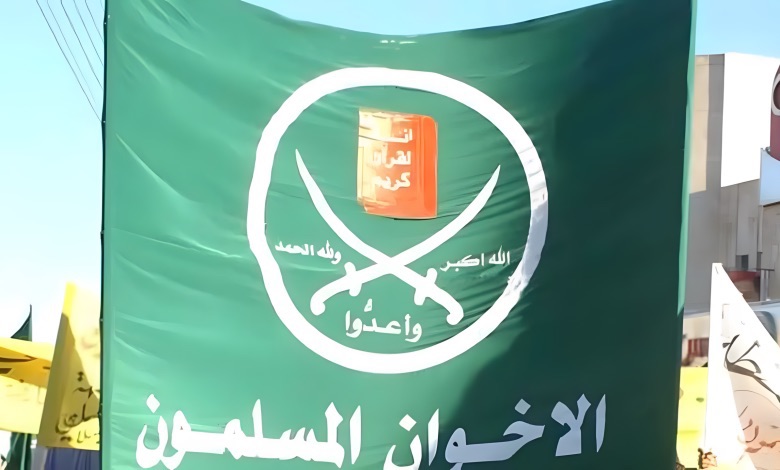
The US President Donald Trump’s decision to designate the Muslim Brotherhood Organization, including the Sudanese Islamic Movement, as a “Terrorist Organization” has managed to successfully spark widespread controversy both within and outside Sudan. Observers consider the latest development to be a step that could reshape the country’s political and social landscape. The decision came via an executive order issued by Trump, directing Secretary of State Marco Rubio and Secretary of the Treasury Scott Bessent to begin the process of designating certain branches of the group as “Foreign Terrorist Organizations,” focusing on its branches in Lebanon, Egypt, Tunisia, and Jordan. Furthermore, a comprehensive report is to be submitted within (45 days), after which the designations will be implemented.
Domestic and International Developments
Before the decision became official, Texas Governor Greg Abbott announced the designation of the Muslim Brotherhood and the Council on American-Islamic Relations (CAIR) as “Foreign Terrorist Organization and a Transnational Criminal Organization.” This designation prohibits the group from purchasing or owning land in the state, in addition, it grants the Attorney General the authority to take legal action to shut it down.
Across Europe, major cities such as Vienna, Prague, London, Paris, Berlin, Brussels, Switzerland, the Netherlands, and Ireland witnessed widespread protests demanding that the group be designated a “Terrorist Organization” and that sanctions be imposed on its financial networks, as part of growing efforts to curb the spread of extremism within European societies.
The Sudanese Position
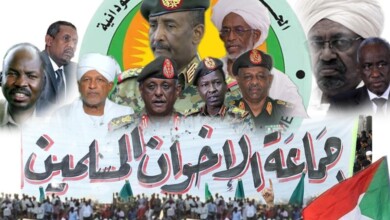
In Sudan, prominent political entities, including the Civil Democratic Alliance of Revolutionary Forces (Sumoud) -chaired by Abdullah Hamdok, and the Sudan Founding Alliance (Tasis) -chaired by Mohamed Hamdan Daglo, called for the Islamic Movement to be designated a “Terrorist Organization” in an attempt to curtail its oppressive influence within the country. As the aforementioned forces accuse the Islamic Movement, led by Ali Karti, of igniting the war that erupted in (mid-April 2023).
Observers believe that this designation could potentially further complicate the Sudanese crisis and prolong the war, especially since the Islamic Movement is fighting alongside the Sudanese Armed Forces (SAF) against the Rapid Support Forces (RSF) in a conflict nearing its fourth year and which has created the world’s largest humanitarian crisis, according to the United Nations.
The Intellectuals’ Point of View
Sudanese politician and Intellectual Dr. Al-Nur Hamad believed that the US decision is long overdue, noting that Saudi Arabia, the United Arab Emirates, and Jordan had officially designated the group a “Terrorist Organization” years ago. He explained that the group is multi-headed and works to destabilize Arab and Islamic regimes, asserting that it is responsible for most acts of violence and terrorism in recent decades. He added that the group was historically used by American and Saudi Intelligence Services to counter the expansion of Communism and the Soviet invasion of Afghanistan, nevertheless, this support later backfired on its backers in the form of attacks that targeted American and Saudi interests, such as the Khobar Towers bombing and the September 11 attacks in New York. Dr. Al-Nur emphasized that the group is octopus-like in nature, hiding behind charitable names and activities, however, at its core, its a violent group that believes in seizing power through violence.
Implications of the Decision
Journalist and political analyst Maher Abu Al-Jukh explained that the decision has passed its initial stage following approval by the Foreign Relations Committee and is expected to pass easily in Congress due to the Republican majority. He pointed out that the decision will create a significant impact on Sudan, especially since the Quad Countries (Egypt, the UAE, Saudi Arabia, and the United States) had previously designated the group as a “Terrorist Organization.” Such development will only serve to reinforce their statement issued last September, which stipulated the exclusion of the Muslim Brotherhood, the dissolved party, and terrorist groups from participation in affecting Sudan’s future. Furthermore, Maher affirmed that this decision closes the door on the desperate attempts by the dissolved Party (NCP) to return to the political scene.
Fears of Escalation
In contrast, Mohamed Mirghani, an expert on Islamist groups, believes that the designation could potentially escalate the conflict. He argues that the Islamic Movement might perceive itself as targeted and promptly put forth efforts to intensify its resistance, further exacerbating tensions between the Sudanese Army and the international community. He asserted that the Movement’s leaders will not concede easily and will probably continue fighting unless they receive guarantees that their interests will be ensured and their leadership will not be held accountable in the future. In conclusion, Mohamed Mirghaniemphasized that the solution lies in an inclusive dialogue that excludes no one, in order to successfully overcome the bitterness of the past and build a unified Sudan.
Regional and International Dimensions
Reports circulated shared information conveying that Türkiye had initiated a process of cracking down on Sudanese Islamists following the US decision, nonetheless, Al-Nur Hamad indicated that there was no confirmed information available yet. Meanwhile, the US Administration tasked the CIA with monitoring the flow of weapons, funds, and gold exports to Sudan, in an attempt to cut off sources of war financing. Abu Al-Jukh explained that the US decision remains a national law that does not automatically apply to other countries except through agreements or Security Council resolutions, noting that Türkiye’s position will remain contingent on its relations with the affected countries. He affirmed that Türkiyemight curtail the group’s activities if it faced US or regional pressure, however, so far, it has shown no signs of changing its stance.
Ongoing Debate
The designation of the Islamic Movement as a terrorist group remains a subject of widespread debate in Sudan. As some believe its a step that could weaken the group’s ability to continue the war, whilst others warn that it will only serve to escalate the conflict. In any case, the greatest challenge at the moment is ensuring that this designation is part of a comprehensive plan to achieve peace and stability in Sudan, rather than becoming an additional factor that further complicates the crisis.