
Biased Justice: Why Does the Authority Fear an International Investigation?
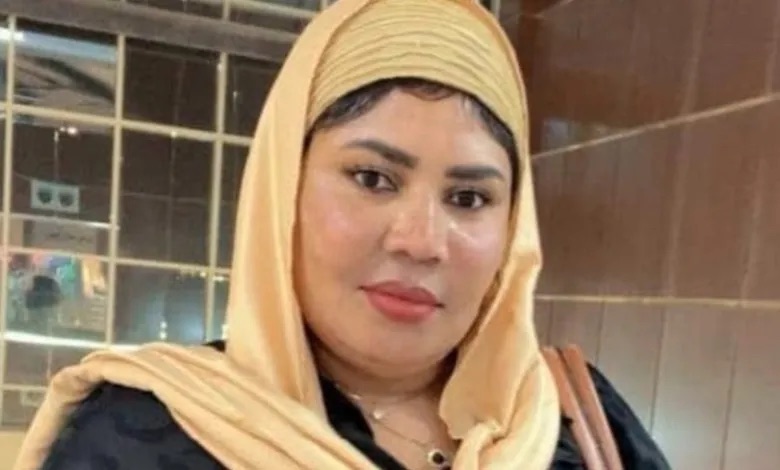
Safaa El-Zein
At the very moment, when the Sudanese citizens were harboring hopes of a genuine breakthrough in the human rights violations file, and for a transparent investigation to be launched in an effort to clarify the facts, the Port Sudan Authorities issued a decision rejecting the referral of the crimes committed in El Fasher to the International Fact-Finding Committee. Moreover, they declared their non-recognition of the Committee and affirmed that they would not allow it entry. This decision, ostensibly a defense of State Sovereignty, nevertheless, it reveals a far more dangerous aspect: For its a justice system tailored to political whims, used when needed, and discarded when necessary.
A State confident in itself does not fear investigations, and a State that believes in its institutions does not shy away from international oversight. However, a State that treats justice as partisan property or an extension of executive power, would naturally believe that any independent committee represents a threat to its system, not to its judiciary.
The Port Sudan Authorities’ rejection of an international investigation is not an administrative decision, but rather a direct political message: We will not allow any accountability that we do not control. Hence, any discussions in regards to national investigation mechanisms sounds eloquent, nevertheless, it loses its value when these mechanisms themselves are part of the conflict, subject to pressure from the authorities, or surrounded by widespread suspicions about their independence. For how can a national committee investigate violations committed under an authority that rejects oversight? And, pray tell, how can victims be expected to trust a system that is part of the problem?
Justice is not granted by political decree, but rather built through independent institutions, not through directives from higher positions. An authority that rejects international oversight in the name of Sovereignty -naturally- ignores the fact that Sovereignty isn’t a shield for impunity, and disregards that cooperating with the international community to protect civilians is not a diminution of national dignity, but rather an affirmation of the latter. Therefore, utilizing Sovereignty as a shield to obscure accountability is nothing more than a reproduction of the approach that plunged the country into a spiral of wars and bloodshed.
Furthermore, to makes matters worse, the Port Sudan authorities have begun tailoring justice to fit their political interests; They brandish the international community when they wish to condemn their opponents, and when the investigation approaches sensitive areas, they invoke the rhetoric of Sovereignty and reject oversight. This contradiction is not spontaneous; rather, it reflects a system that views justice as a political tool, not an institutional value; a bargaining chip, not an inherent right of the victims.
Despite all the statements of “Independent National Alternatives,” the recent Sudanese experience -effectively- demonstrates that official judicial bodies are either infiltrated, pressured, or incapable of exercising their jurisdiction over the accused, which, in turn, makes any discussions regarding an internal investigation more akin to “Crisis Management” than “Uncovering the Truth.” For national justice mechanisms cannot function effectively while security agencies are a direct party to the conflict, and they cannot hold accountable those they cannot reach or control. Herein lies the greatest contradiction in the regime’s rhetoric: As it demands the world’s vote of trust whilst refusing to extradite criminals wanted by international justice, such as Omar Al-Bashir and his associates, in addition, the regime is simultaneously insisting on withholding information from its own people.
Peace cannot be built on concealing issues, obstructing investigations, or fabricating official narratives detached from reality. Today, the burning question is not: Why would the Port Sudan Authorities reject an international investigation? But rather: What are they afraid of? And why are they preventing the investigations from being launched?
At this juncture, Sudan needs genuine justice, not justice orchestrated from political offices. It needs an independent investigation, not a committee appointed to protect one side at the expense of another. And above all, it needs a national will that prioritizes the rights of victims over the calculations of power. Hence, without accountability, there can be no peace; without transparency, chaos cannot be overcome; and without confronting the truth, Sudan will remain an open arena for new crimes… crimes that may be committed, and for which investigations will be rejected, as well.