IMF: Sudan is facing monetary collapse and double-dip contraction

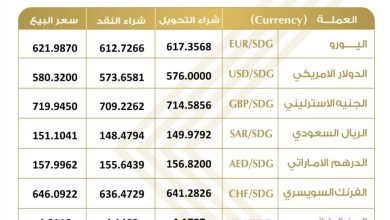
Sudan has lost its financial balance after its foreign exchange reserves were depleted and its external cash flows declined, including remittances from expatriates, which fell by (70%). This contributed to the acceleration of the Sudanese Pound’s decline -in value- against foreign currencies. As the dollar exchange rate, for example, reached (3,700 pounds) for the first time, exceeding all expectations.
The fluctuations in currency exchange rates on the official market reveal the extent of the banks’ suffering and the gap between them and the Central Bank, for most of them were affected and lost their foreign currency reserves,as the selling price of the dollar at the Central Bank of Sudan rose to (2,600 pounds), whilst some other banks recorded a higher rate, reaching (2,700 pounds). This is in addition to the widening gap between the official and parallel rates. Furthermore, the deterioration of the pound’s value confirms the continued loss of monetary control over the currency market, in the absence of effective financial and economic tools, according to observers.
Experts described the Sudanese Pound’s decline as the most rapid in recent days during the war, calling on the authorities to take urgent measures to halt the decline.
Banking expert Ayman Ahmed emphasized the need for competent authorities to adopt an innovative financial mechanism aimed at stabilizing the local currency exchange rate by issuing international participation bonds based on certificates of untapped natural assets, such as gold, oil, and gas.
Moreover, the banking expert explained that Sudan is currently implementing a managed flexible exchange rate system, however, it has yet to succeed in curbing inflation or achieving currency stability, especially in light of the disruption of traditional monetary policy tools due to the ongoing war and the decline in the State’s ability to intervene effectively. He pointed out the existence of untapped resources that represent a great opportunity to provide monetary cover for the Pound, in addition to bolstering foreign exchange reserves in an effort to cover import bills without the need for gold, by relying on internationally recognized asset certificates.
According to a report issued by the International Crisis Group, the continuation of the armed conflict threatens a complete collapse of the Sudanese economy and places the country on the brink of a stifling financial crisis, in the absence of a clear international rescue plan.
A report issued by the Economic Analysis Unit of The Economist magazine last August indicated that the Sudanese economy is facing a “double-dip contraction” as a result of the ongoing war. As the (GDP) fell by (18%) in the span of one year, and inflation soared to more than (400%) during the war, amidst a near-total collapse in supply chains compound with a near-total halt to agricultural and industrial production in most states.
A report issued by the International Monetary Fund (IMF) in September (2025) indicated that Sudan is facing a “comprehensive monetary collapse,” with the Sudanese pound losing its primary function as a means of exchange and pricing.
The report indicated that the country is suffering from a double-dip contraction in domestic production and consumer demand, amidst the disintegration of State financial institutions. The report also stated that more than (80%) of daily transactions are now conducted in dollars or through barter, in a climate characterized by lack of confidence in the local currency.
Al-Araby Al-ssJadeed (New Arab)