Exclusion: The Blight of the Sudanese Political Mind
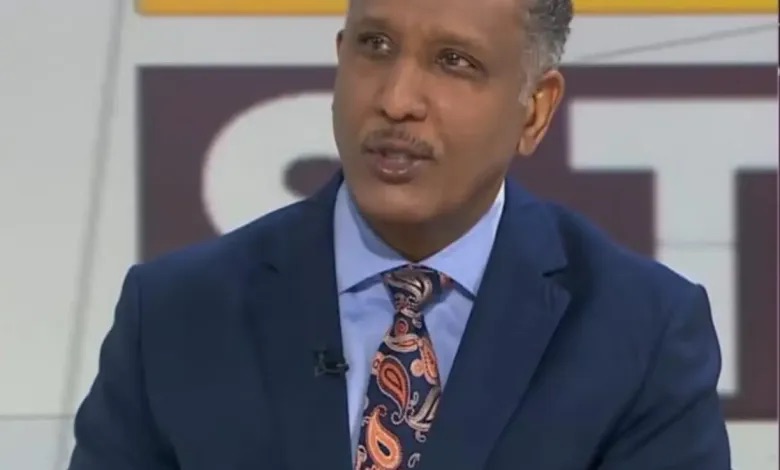
Dr. Al-Waleed Adam Madibou
Historically, the insistence of the Central elites on excluding the cultural heritage of the Sudanese countryside only served to deepen the psychological rift and ignite political tension that culminated in the secession of the South. In regards to the South, we not only lost land, but a great cultural repository as well that could have naturally served as a foundation for the fusion of collective consciousness —the fusion required to support confederation if federalism proved unattainable. At this juncture, if we fail to address the aforementioned, the West as well as the East will -therefore- travel down the same path, for nothing is more dangerous than a fractured conscience; its the secret door to the loss of homelands.
Martin Heidegger famously stated, “Language is the house of Being.” Hence, if the house is destroyed, the inhabitant is lost, and so is the shelter. This is a realistic description of the state of nations torn apart by tyranny. As the tyrant not only silenced tongues, but confiscated the house itself, confiscating linguistic vitality, rendering the word empty, the poem a meaningless echo, and the painting a colorless shadow. When expression is suppressed, people are left with no choice but to resort to violence. The gun, in consequence, becomes an alternative language, and hostility becomes a constitution testing the unity of the nation.
Naturally, this tragedy has been repeated in the Sudanese experience, as in other Arab and Islamic experiences: When dialogue was reduced to regulatory controls, art was rendered to mere religious chants, and knowledge to royal fatwas. The Salvation (Inqaz) was not an anomaly, but rather an extension of a long process that made the Theocratic State the norm and criticism the exception. From Sennar to the Mahdist State, from the Caliphate to the Gulf Rentier regimes, despotism was the golden rule, whilst freedom was granted only as a passing front.
The culture of exclusion emptied parties, unions, and national bodies of intellectuals and innovators. This weakened, as a result, the civil resistance front and led to the fragmentation of the political structure. Therefore, the absence of a “Strategic Studies Unit” and the exclusion of intellectual and scientific elites —motivated by personal envy and jealousy— will continue to be one of the most dangerous blights plaguing political activity in Sudan, as the latter has been governed by the narrow, subjective view of the political leadership, regardless of its name or color.
Adonis realized that “Arab culture is governed by a closed structure that only reproduces itself.” Nasr Hamid Abu Zayd emphasized that, in our collective consciousness, a text can only be read as an absolute certainty, not as a question or a debate. Hence, the Arab intellectual —whether in exile, like Arkoun, Shariati, and Soroush, or at home— is always confronted on dual fronts: By the oppressive political authority and a crumbling cultural structure. Therefore, even when tyranny fails to directly confront criticism, as in the case of patriarchal regimes that foster inactivity more than repression, the intellectual remains captive to a cognitive structure that views dialogue only as a threat to the unity of the group.
Foucault illuminates this paradox, as in his opinion: Discourse is not limited to words; itsa practice that serves to redraw the maps of power and knowledge. Discourse determines who has the right to speak, in what language, and the conditions -under which- said discourse takes place. Tyranny, on the other hand, places the language under siege, turning it into a closed circle, transforming it, as well, into a regulatory apparatus rather than a horizon of creativity. As Hannah Arendt stated, “When politics deteriorates, the public sphere collapses, and when the public sphere collapses, language is corrupted.” Moreover, the aforementioned corruption is not only moral, but ontological as well: Corruption of the being itself.
Language is renewed when it meets the needs of reality, however, it declines if its use shifts from creativity to convenience. Nevertheless, music, art, and theater, even under the control of hegemonic discourses, remain a means of escape and resistance. Songs, as Mustafa Sayed Ahmed exemplifies, convey society’s pain and dreams, restoring language’s vitality and presence in the public sphere (Ibrahim Barsi).
At this juncture, the tragedy unfolding becomes rather clear: What we have lost is not only freedom of speech, but the possibility of assembly itself. There is no homeland without free discourse, and no nation without a public space that accommodates poets and intellectuals as well as peasants and soldiers. When space becomes narrow, the crowd disperses; when the word is silenced, bullets find a place at the forefront. Previously, we witnessed the aforementioned scenario become a reality on the streets of Khartoum, as in Beirut, Damascus, and Tehran, where the doors to debate were slammed shut and in consequence, the paths to carrying arms were created.
Therefore, the battle for freedom is not against a specific tyrant, but against an entire structure: cultural, cognitive, and political. We need an alternative discourse, one that does not repeat the clichés of authority, nor hide behind the sanctity of the text, but rather paves the way for free dialogue, as Habermas proposed, and restores to language its original function: To become a bridge, not a wall of confinement. As without it, there is no national assembly, no horizon for civilization, and no meaning for humanity.
In conclusion, we ought to believe that time is running out: If the ongoing acts of stifling the language’s freedom, the marginalization of the countryside, and the exclusion of minds continue, all that will remain of Sudan is scattered ruins where owls hoot. A fractured conscience is the first shot in the head of a nation. If we do not put forth diligent efforts to rise up today and reclaim the language, intellect, and art’s place at the heart of the public sphere, tomorrow will be merciless, and history will record that we were false witnesses to our nation’s suicide.