Sudan, between the memory of devastation and the dream of establishment

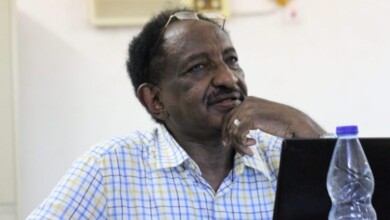
Dr. Al-Waleed Adam Madibou
Any efforts to seriously contemplate Sudan’s future cannot disregard the most prominent fact: “The Sudanese State was never built on a just social contract.” Rather, it was founded on a system eerily similar to apartheid, which originated in the “crisis zone” extending from Atbara to Al-Jaili. There, human groups settled, and from the latter emerged an ideological minority that monopolized the country’s spiritual and material resources, it constructed a strict hierarchical authority based on loyalty and favoritism, rather than direct ethnic and tribal affiliation.
Accordingly, any discussion about “reform” ought to begin with addressing this dysfunctional structure. Security reform and transitional justice are the two primary approaches, however, statements regarding transitional justice in the traditional sense obscures the essence of the crisis: “The structural violence of the Sudanese State.” The aforementioned, which has extended across time and space, managed to affect ethnic, regional, class, and gender groups to varying degrees. As an impoverished woman from the Southern Belt area, for example, sufferers to a greater extent from State injustice than her counterpart in other regions, due to location and class characteristics.
Hence, the importance of the concept of “Historical Justice,” as proposed by the Sudan People’s Liberation Movement and adopted by the Sudan Founding Alliance (Tasis), becomes rather apparent. This concept transcends individual behavior to encompass cultural and intellectual structures, requiring radical reforms in the judiciary, education, and media fields. For how can we expect an educational system that glorifies slave traders and portrays them as national heroes to produce generations capable of healing rifts and mending the social fabric? Moreover, how can we expect an authoritarian media to make room for the narratives of the oppressed?
Nevertheless, historical justice is not practiced in a vacuum. It requires a combination of traditional aspects and modern institutions. South Africa’s experience with “truth and reconciliation” serves as a reminder to us of the potential for leveraging tribal systems to address violations whilst simultaneously bringing the most prominent criminals to justice. This combination is what Sudan needs: a judiciary rooted in tradition, but elevating its standards to the level of universal justice.
Because politics is far from being a mathematical calculation, but rather is the art of possibilities, it is necessary to recall the ancient jurisprudential principle: “Acquiring benefit and averting harm.” Exonerating military leaders from prosecution in exchange for permanently removing them from the political equation may achieve a higher interest that transcends the natural desire for retribution. Nonetheless, it cannot equate those who planned genocide with those who carried out an order whilst coerced by the gun.
However, “The success of historical justice is conditional upon the existence of a new judicial institution and regular forces,” and at this juncture, the term “reform” is confronted with the lack of foundation, as there is no institutional memory or vital elements upon which a foundation can be established. The war demonstrated the warring parties’ lack of morals -without exception, revealing that the issue requires the establishment of new, modern institutions, not patching the collapsed entities.
The military regimes, specifically the Salvation (Inqaz) Government, excluded officers from the western and eastern regions, some of whom failed to attain a promotion above the rank of Brigadier General, while the General Staff remained the exclusive domain of citizens of a specific geographical area.
“Thus, ethnic supremacy and racial discrimination was embedded to the root.” In consequence, some leaders from the aforementioned excluded groups became agents and brokers, unafraid to bomb schools in the Nuba Mountains or attack markets in Al-Koma with internationally prohibited chemical weapons. For they renounced their people’s identities until they became more loyal to self-interest than to national affiliation.
While South Africa took six years to develop its institutional systems by adopting a quota system that required adjusting regional, ethnic, and tribal representation at each level; the experiences of Ethiopia and Uganda may pave the pathway to contemplating the concept of “establishing Police and Military Forces from scratch” based on fair representation and regional balance, rather than political loyalty or ideological empowerment. And at this juncture, the project of “Tasis / establishment,” not “reform,” emerges as a historical necessity.
In conclusion, the Sudanese war not only destroyed infrastructure and resources, but also targeted honor and sanctities, nearly succeeding in suffocating the “spirit of the people.” Furthermore, the womb of this devastation, doesn’t give birth to “reform,” but to a new foundation / Tasis. A foundation that combines historical justice with security reform, and rebuilds institutions based on the values of competence and justice, not historical privileges. Only this path can save the concept of the “Sudanese nation” from extinction and grant it a second chance at existence.