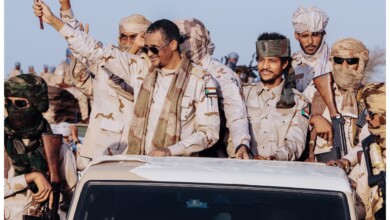
International figures hold SAF responsible for obstructing peace prospects
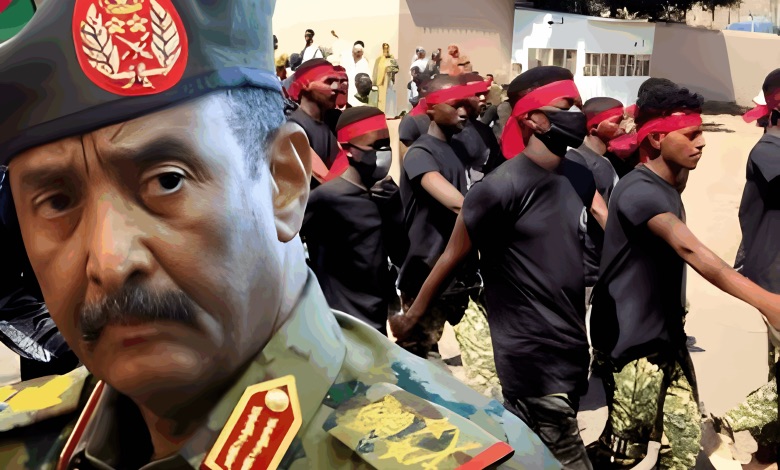
Amidst warnings of the extremist groups’ expansion in Sudan
Recently, international and African diplomatic figures as well as Sudanese politicians were in consensus in their belief that the Sudanese Armed Forces (SAF) is actively working to obstruct peace prospects and thwart any opportunity for dialogue aimed at ending the ongoing war in Sudan. The aforementioned belief holds true however because the Sudanese Army had consistently boycotted several international negotiating forums, starting with the Jeddah forum in (May-June 2023), the Manama forum in late (2023), and the Geneva talks at the beginning of this year. At the high-level symposium on Sudan held in the Kenyan capital, Nairobi, international figures believed that the Sudanese Army and the extremist Islamist groups fighting alongside it have abandoned all peace efforts whilst expressing hardline positions by pursuing a military solution. Moreover, the Sudanese Army has concluded arms deals with several countries, most notably of which is Iran and Türkiye. Recently an arms deal was concluded with Pakistan as well.
The high-level symposium on Sudan concluded on Thursday in the Kenyan capital, Nairobi. The symposium, organized by the Kofi Annan Foundation, Amina Life, and the Maghreb-African Center, aims to launch a new peace process under the auspices of the African Union (AU), in an effort to bring together the Sudanese parties, build a sustainable peace process and end the war in Sudan.
The symposium opened with remarks by Amina Mohamed, the head of Amina Life and former Kenyan Minister of Foreign Affairs, in addition to Mongi Hamdi, the former Tunisian Minister of Foreign Affairs and former head of the UN Mission in Mali. The symposium was attended by a large number of representatives of diplomatic missions as well as representatives from Kenya, the United States, Canada, Mozambique, Botswana, Mali, and Portugal. Furthermore, Tapiwa Gomo, the representative of the United Nations Office for the Coordination of Humanitarian Affairs (OCHA) and Head of the Communications and Information Office was amongst the attendees, in addition to a delegation from the Civil Democratic Alliance of Revolutionary Forces (Sumoud), headed by the Alliance’s Secretary-General, Siddiq al-Sadigal-Mahdi, along with Khalid Omar Youssef, a member of the General Secretariat, and Bakri al-Jak, the official spokesperson.
The participants agreed on the necessity of finding a peaceful solution for the war in Sudan, as military solutions have no hope in ending the bloody conflict that has been plaguing the State for two and a half years. They held the Sudanese Army responsible for thwarting peace and negotiation initiatives that began with the Jeddah Forum in (May-June 2023), and the Manama negotiations at the end of the same year, as well as for failing to respond positively to the Geneva talks at the beginning of this year, (2025). Furthermore, the participants held both warring parties as well as the parties fighting alongside them responsible for violations against civilians, they stressed the importance of protecting innocent civilians and facilitating humanitarian access to those in need.
Former Foreign Minister Amina Mohamed stated that the ongoing war in Sudan -since 2023- has created a catastrophic humanitarian situation and contributed to the displacement and asylum of millions of Sudanese to neighboring countries. She emphasized the necessity of supporting peace efforts and urging the Sudanese parties to engage in dialogue. In addition, she highlighted the importance of informing the international community of the reality of the ongoing conflict in Sudan in an effort to support peaceful solutions and initiate a constructive dialogue that could successfully end the war.
The head of Amina Life warned of the influence of extremist groups and their role in the ongoing war in Sudan, as she urged the African Union and the Intergovernmental Authority on Development (IGAD) to reclaim leadership in driving a peace process to push for an end to the war and for Africa to be the platform for finding a solution to the Sudanese crisis.
Amina went on to reiterate the importance of the efforts put forth by the United Nations and its Agencies in providing humanitarian aid, as well as supporting diplomatic efforts to find a peaceful solution and pressuring parties that reject dialogue. She emphasized the necessity of ensuring that the launch of a peace process and the humanitarian aid delivery ought to proceed in a simultaneous manner.
For his part, former Tunisian Foreign Minister and UN Special Representative for Mali, Mongi Hamdi, stated during the symposium that the war in Sudan is largely forgotten in terms of international media coverage, making it largely invisible. Hamdi explained that the bloody conflict has led to the internal and external displacement of millions of people. He warned of the imminent danger the growth of armed and extremist militias in Sudan represents, as the latter are fighting alongside the Sudanese Army, in addition to militias that have come to Sudan from neighboring countries such as Ethiopia and Chad. The former Tunisian Foreign Minister added that the entry of extremist groups exacerbates the internal and regional threat exponentially. He added, “These armed groups pose a significant threat to the prospects of achieving a peaceful solution, as a military solution to this conflict cannot be attained.” He pointed to the political and peaceful solutions proposed in the Manama negotiations at the end of (2023) and the Geneva talks at the beginning of (2025), which were rejected by the Sudanese Army, leading to the escalation of the conflict and war.
Moreover, Mongi Hamdi addressed the involvement of extremist groups and militias in the fighting alongside the Sudanese Army, in addition to the Tigray militias, noting that the multiplicity of militias fighting alongside the Sudanese Army threatens regional security and transforms the Horn of Africa region into a hub of instability. He added, “Extremist groups such as Da’esh and radical Islamist groups from Syria, Iraq, Mali, the Sahel and Sahara of North Africa could relocate to Sudan, as the State represents an ideal environment for them.” In conclusion, Hamdi went on to address the accusations regarding the Sudanese Army’s use of internationally prohibited chemical weapons, sharing that this issue requires a serious international investigation to identify those involved.
The situation in Sudan has recently deteriorated significantly, given the Sudanese Army’s rejection of any peace initiative while using all types of internationally prohibited weapons, which prompted the United States to impose sanctions on it. However, this means that solutions will be intractable unless pressured by the international community, especially the African Union, a matter emphasized by the symposium attendees.
The UN Special Representative for Mali stressed the importance of reaching a peace agreement that would lead to the formation of an interim civilian government that would arrange for elections to build a foundation for post-war democracy.
Tapiwa Gomo, the representative of the United Nations Office for the Coordination of Humanitarian Affairs (OCHA) and Head of the Communications and Information Office stated at the high-level symposium on Sudan that the conflict in this country has led to the displacement -externally- of (10 million) people following the beginning of the conflict. He added that the armed conflict has led to severe food shortages and lack of health services, and that the ongoing fighting in Kordofan and Darfur has affected more than (500,000 people) in Displacement Camps in the region of Darfur.
He noted that they have issued continuous calls to stop attacks on civilians, and that (75%) of women are exposed to health and humanitarian risks due to the war in Sudan, which the Sudanese Army is rather insistent in its efforts of continuing, in addition to rejecting and even obstructing any attempts to reach peaceful solutions.
Former (IGAD) Secretary-General Mahboub Maalim warned of the serious humanitarian situation in Sudan and its grave repercussions for the country’s future. He also warned of the dangerous regional impacts, which are keeping Sudan in a state of ongoing chaos and the furthering continued flow of Sudanese refugees to neighboring countries in search of safety. Mahboub pointed to the importance of working on all previous regional initiatives, starting with the Jeddah, Manama, and Geneva forums, in addition to an initiative supported by the African Union and (IGAD) in an effort to pave the path for Sudan to survive the depths of war.
Former Minister of Foreign Affairs and International Cooperation in the Cabinet of South Sudan, Barnaba Marial Benjamin indicated, in his speech during the symposium and to the media, that the conflict in Sudan will not be limited to this country alone, but will have a dangerous impact on the region, given the growing presence of armed groups and militias. He pointed to the role of the Islamic Movement and extremist militias in prolonging and continuing the conflict, as well as the intransigence of the Sudanese Army displayed blatantly throughout the previous period. He believed that the crisis in Sudan escalating to the point of two existing governments would greatly complicate matters further, nevertheless, according to his remarks, he looks forward to an African role that would contribute to ending the crisis.
Bakri Al-Jak, the official spokesperson for the Civil Democratic Alliance of Revolutionary Forces (Sumoud) held the Islamists and the Islamic Movement in Sudan responsible for the continuation of the conflict and war in Sudan, and for further exacerbating the situation in the country to the point of a dangerous social and political division that threatens the nation’s unity. He referred to the statements made by the leadership of the Islamic Movement and the dissolved National Congress Party (NCP), both constantly and recently, that the ongoing war in Sudan is the path that will allow them to return to power. Furthermore, Bakri pointed to the war narrative adopted by the Islamists through hate speech and racism, adding that the violations committed by the Sudanese Army and the abuse of civilians were horrific, as were the violations of the Rapid Support Forces (RSF), which were exaggerated by the Islamists and the Sudanese Army in order to mobilize civilians to fight within their ranks. He believed that the issue of ending the war in Sudan through a military solution is illogical and will only generate new wars. The official spokesperson for (Sumoud) reiterated in his statement that the Islamists are responsible for fueling the war and investing in it for their political interests whilst preventing the establishment of a civilian government that would lay the foundations of sustainable democracy in Sudan.
Al-Jak explained that describing the war as a rebellion on the Rapid Support Forces’ part is inaccurate, as the reasons that ignited the war are well-known and the Islamists were responsible, for they are now opposing an end to the war and expressing hardline positions. According to Bakri, “The vast majority of Sudanese do not believe the war serves any of their interests.” He continued, “The Islamists within the Sudanese Army, the General Intelligence Service, and State institutions, such as the Ministry of Foreign Affairs, have been working for two years to obstruct any negotiations to end the war, from the Jeddah and Manama forums to the Geneva talks.”
He pointed out that this initiative, organized in Nairobi, is an important attempt to restore the Sudanese issue’s position on the African agenda, to support efforts to stop the war and regain the international community’s attention in regards to ending the conflict in Sudan through (IGAD) and the African Union, complementing roles with the United Nations, and reaching a comprehensive approach to humanitarian and political processes.
It is worth noting that the Kofi Annan Foundation, Amina Life, and the Maghreb-African Center organized the high-level symposium with the intention of launching a peace process in Sudan under the auspices of the African Union.