Turkish report reveals how weapons from Türkiye reached the Sudanese Army
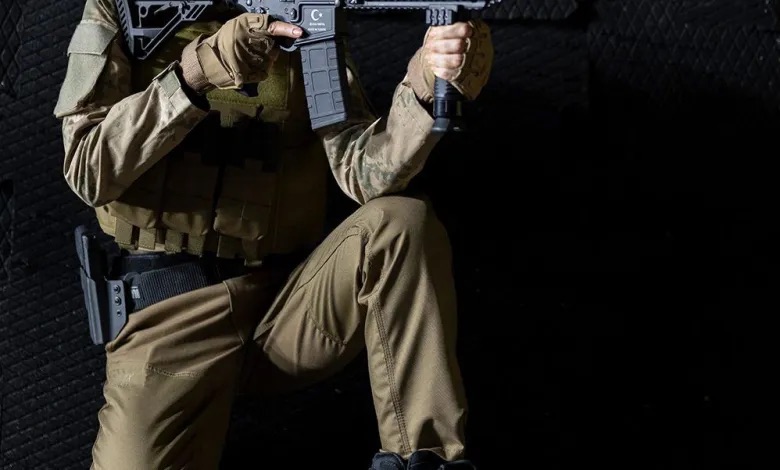
A report by a UN Panel of Experts stated that weapons manufactured by Turkish arms producers are contributing to, as well as further fueling the conflict in Sudan and South Sudan, raising valid concerns regarding possible violations of the international arms embargo and weaknesses in Ankara’s export controls.
The report, submitted to the UN Security Council in July, documents several cases in which weapons of Turkish origin were recovered from armed groups and militias. Furthermore, amongst the seized weapons were BRG Savunma BRG-55 rifles and HUSAN Arms MKA 556 rifles, both produced in Türkiye and found in South Sudan. In addition, rifles manufactured by the Turkish company (UTAS Defense) were identified in the hands of armed groups, despite the embargo being in effect.
Under Turkish law, the sale of defense materiel abroad, whether by private or State-owned companies, requires prior approval from the Turkish Armed Forces, the Presidency of the Defense Industry (SSB) and the Ministry of Foreign Affairs. The fact that Turkish-made rifles surfaced in Africa suggests that while export licenses were granted for sales to third countries, shipments were later diverted into conflict zones.
Although the report doesn’t accuse Ankara of deliberately violating the embargo, it underscores loopholes in Türkiye’s export monitoring and emphasizes the risk of diversion to sanctioned areas. UN investigators stressed that the presence of recently manufactured Turkish rifles, along with other foreign weapons, demonstrates the shortcomings of international enforcement of the embargo imposed on South Sudan in (2018).
The Panel stated that many of the confiscated arms were newly produced, ruling out the possibility that they came from old stockpiles. Instead, they appear to have entered South Sudan through illicit supply chains, strengthening non-state armed groups and undermining fragile peace agreements.
One of the companies identified in the report is BRG Savunma, officially registered as Burgu Savunma Teknolojileri ve HavacılıkA.Ş. in Istanbul. Owned by businessman Fatih Doğru, the manufacturer was established in (March 2021) under the name Burgu Metal Sanayi ve Ticaret Ltd. Şti. and was later converted into a corporation and renamed in (June 2024). BRG Savunma, which produces the BRG-55 rifles found in South Sudan, has been banned twice from bidding on Turkish Armed Forces contracts, once for six months in (May 2025) and again for two years in (June 2025), due to violations of contract terms.
Another company, HUSAN Arms, manufactures the MKA 556 rifles identified by UN investigators. The firm, based in Türkiye’s Konya province, operates under the name Husan Metal Teknolojileri Sanayi ve Ticaret A.Ş. and was established in (1998) as HuğluAv Malzemeleri Sanayi ve Ticaret Ltd. Şti. It is controlled by members of the Uğur family — Ali, Errol, İsmail and Harun Uğur —together with two additional shareholders, Keziban Çetindede and Ramzan Alkan.
The third Turkish manufacturer cited in the report is UTAS Defense, formally registered as UTAŞ Savunma Sanayi ve Ticaret A.Ş. and based in Antalya province. Managed by Sezgin Köysüren and Muhammet Serkan Köysüren, the company produces 5.56×45 mm caliber rifles, some of which were found in the hands of armed groups in South Sudan.
The UN Panel warned that the circulation of these weapons is worsening the violence in South Sudan, where both government forces and opposition groups have been implicated in serious human rights abuses, forced displacement and systematic attacks on civilians.
Furthermore, Türkiye’s defense industry has rapidly expanded its exports across Africa and the Middle East in recent years, boosting Ankara’s geopolitical influence. However, the discovery of Turkish-made weapons in South Sudan raises urgent questions about oversight, accountability and compliance with international arms embargoes.
The UN Panel of Experts urged in their report Türkiye, along with other States whose weapons were traced to South Sudan, to strengthen end-user certification and impose stricter export controls to prevent diversion. Without decisive action, the report warns, South Sudan risks further destabilization as foreign-supplied arms continue to fuel cycles of violence.