Western Reports: A Plan to diminish the Islamists’ Influence within SAF, under Egyptian supervision
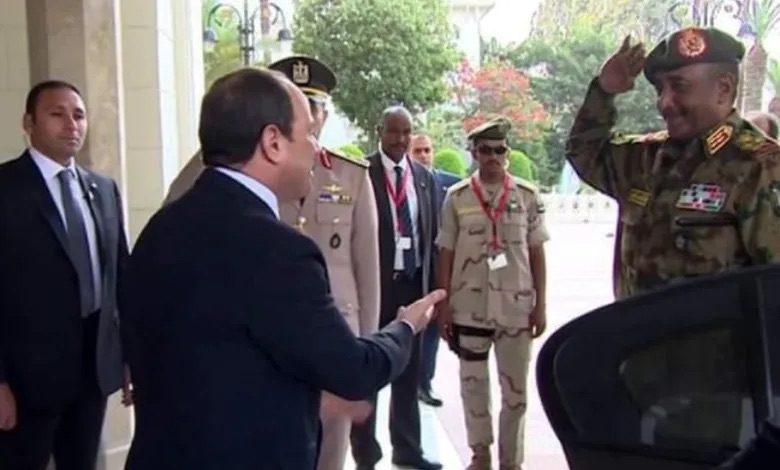
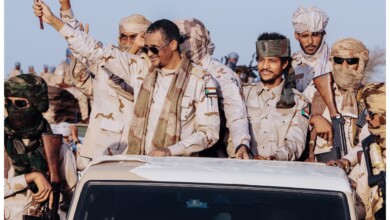
Leaked Western reports have revealed the existence of an actual plan to remove members of the Muslim Brotherhood from the Sudanese Armed Forces (SAF), as part of direct coordination between the Commander-in-Chief of the Sudanese Army, Lt. Gen. Abdel Fattah Al-Burhan, and the Egyptian Authorities.
According to informed sources, the recent decisions, which included the formation of a new Chief of Staff, compound with the promotions and retirements of a number of senior officers, came as a result of direct pressure and dictates from Cairo, as the latter stressed the need to subject all combat support formations to the Sudanese Armed Forces Law.
The Egyptian Efforts and Pressure from Washington
The sources explained that the Egyptian actions followed the intervention efforts put forth by US President Donald Trump’s Administration in regards to the Sudanese crisis, calling on the concerned parties to take “serious” steps to end the war that has been ongoing for more than two years.
They added that the failure of the Quartet meeting prompted Washington to propose a new roadmap aimed at unraveling the external complications affecting the Sudanese issue.
Al Burhan in the Balance
The same sources indicated that Cairo’s support for General Al-Burhan, who -for years- was considered the strongest ally of the Islamists, is now facing serious challenges.
Under pressure, Cairo has urged Al-Burhan to adopt a comprehensive political and military plan in an effort to eliminate his Islamist allies, amidst close coordination between the Egyptian Intelligence and Sudanese Security Agencies to implement these steps.
Think Tank: Egypt is a Key Player in Sudan
In this context, the Italian Institute for International Political Studies (ISPI) noted that Egypt, despite its economic crises, still possesses extensive influence in Sudan.
The Washington Institute also pointed to Cairo’s “dilemma” in dealing with the Sudanese war, considering that Sudan’s stability remains vital to its strategic interests, however, it is conditional on eliminating “ideological burdens” within the Sudanese Army.
Controversy in regards to Decisions
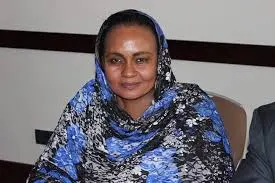
For her part, the Egyptian researcher Dr. Amani Al-Tawil, Director of the African Program at the Center for Al-Ahram Political and Strategic Studies, believes that Cairo is dealing with “realistic facts” and denies the latter’s support for Sudan’s Islamists, and promptly considering what is being circulated in this regard as “mere political propaganda.”
Al-Burhan’s recent decisions reflect the pressure from Cairo
Nevertheless, on a domestic level, and while Al-Burhan’s recent decisions appear to be part of routine procedures followed within the military establishment, their timing, scope, and the combat weight of the officers referred for retirement naturally invoked questions regarding whether the aforementioned decisions are limited to being administrative changes or a calculated move to rewrite the balance in the equation of power within the Sudanese Army as well as remove figures who might stir up disagreements or adopt political positions that could potentially threaten the unity of the military establishment.