Ensuring Sudan’s unity by dissolving Al Burhan’s partnership with the Islamists
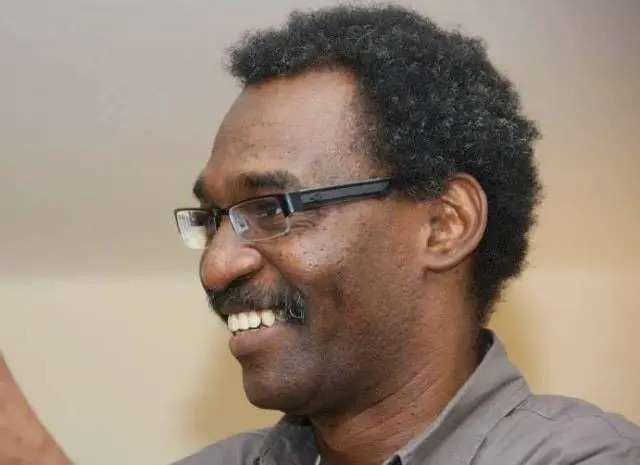
Salah Shu’aib
No matter how far-reaching the predictions are when it comes to understanding the country’s future, the lack of information remains a stumbling block for those seeking to present a complete picture of the situation. That is one point of view, as for another; theideological, regional, and tribal biases have become apparent, and sometimes implicit, in the predictions made by political analysts about the country’s bleak fate.
However, truthfully, the impartial contemplation in the field of social studies is rather difficult, because analysts have an agenda behind their interpretations of political phenomena. Therefore, the analyses and opinions we see at the moment in both traditional and modern media outlets are mostly driven by factional desires or attempts to direct public opinion rather than fully understanding the challenges of the political reality and its potential repercussions, based on the consequences of past events. Sudan’s current miserable state cannot be isolated from that past, when every opportunity to spare the country the inevitable wars was portrayed as the ultimate source of Sudanese suffering. Beyond the wars, we can point to their disastrous effects, from the first war following the country’s independence to the current one: The destruction that befell the social fabric, the decline in the influence of government structures, the State’s failure in fulfilling its role in providing healthcare, education, as well as service opportunities, the migration of millions of honorable, creative minds, the violation of the country’s Sovereignty due to its dependence on foreign powers, etc.
Evident information on the political scene indicates that the ongoing war threatens the unity of Sudan’s geographic fabric due to the hardships it has caused. However, hidden information regarding the plan for the war’s outcome remains confined to the thoughts of those who support it, both domestically and internationally.
Furthermore, if we were to claim that there is an internal or external conspiracy to deprive the country of its opportunity to take the path to democracy in favor of class groups or ethnic groups; then all evidence supports this claim, especially if we link the overthrow of the Salvation (Inqaz) regime to the end of the State’s Islamization project, which barely conceals ideological desires with aims of economic dominance over the country’s resources in order to socially empower one segment of society over others.
Any analysis that ignores this -most- potent factor threatening to tear Sudan apart remains a premature attempt at a political observation intended to extricate Sudan from its crisis. As the ideological and regional schemes that prevent the attainment of a peaceful settlement to the war are now the loudest and most capable of mobilizing financial support to taint public opinion without examining the reality of the war, its details, its course, and the purpose of its continuation.
Surely, we have observed that the political positions supporting the war, coupled with the frenzied media campaign of political Islam and its allies —along with the active role of the Security and Military Intelligence Services controlled by the Islamists— pose a significant challenge to those local, regional, and international alike who seek to end the war and rebuild the country based on transitional measures to achieve a democratic system.
The current political equation in Sudan’s political landscape is as follows: Calls for an open war against all possibilities, compound with civilian and military-civilian efforts to reach peaceful solutions. Nevertheless, the future of changing the aforementioned equation depends on the ability of the two warring parties to end the war with a victory for one party over the other, or to accept a settlement between them, whether through regional or international pressure. This is in light of the weakness of the local pressures already mobilized by civilian organizations that oppose the continuation of the war. However, this opportunity for victory, or that settlement, is linked to procedures that might prove to be time-consuming.
Despite the fear of the potential fragmentation of Sudan’s unity, or the secession of one geographical part of it, there are still opportunities for Al-Burhan alone to prevent this divisive scenario from happening on the ground. I believe that the first step to avoiding the country’s fragmentation is to remove the Islamists from the Army and take courageous steps towards saving the country’s unity from the specter of imminent collapse.
There are complications and logistical challenges facing Al-Burhan when it comes to changing the equation on the political and military fronts, that part is true, nonetheless, he is the one who possesses the symbolic power of the Sudanese Army leadership, which qualifies him to attract supporters for the venture of changing Port Sudan’s position on the war.
We have previously noted the mutual distrust between Al-Burhan’s group and his Islamist supporters, sharing that each side might, at some point, seize the opportunity to devour the other if their paths were to cross. The current indications of disagreements within the forces comprising the Port Sudan Authority may herald a new shift if Al-Burhan manages to take precautions -in a speedy manner- before the Islamic Movement can replace him with a new Army Commander who will follow its political and military whims as well.