The Intelligence Chief delivers a threatening message: Addis Ababa escalates against Port Sudan
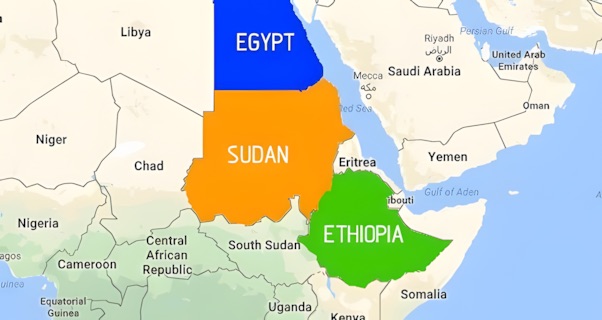
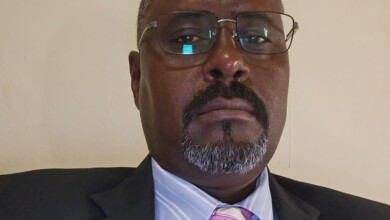
Sources revealed that Ethiopian Intelligence Director Redwan Hussein visited Port Sudan, where he met with the Commander-in-Chief of the Sudanese Armed Forces (SAF), Abdel Fattah Al-Burhan and the Director of the General Intelligence Service in the de facto Authority in Port Sudan. Hussein conveyed the Ethiopian government’s dissatisfaction with the Sudanese Army’s actions regarding its provision of logistical support to Tigray forces in exchange for their deployment in areas of Eastern Sudan, bordering Ethiopia.
The Ethiopian official, according to the Ethiopian website, The Reporter, expressed Addis Ababa’s anger and resentment over the Sudanese-Eritrean coordination, support for Tigrayan forces, and their involvement in the ongoing conflict in Sudan.
The Ethiopian anger stems from the fact that the areas where the Sudanese Army has deployed Tigrayan forces are adjacent to the Ethiopian border, which could result in these armed fighters shifting their focus to operating inside Ethiopian territory, especially after they have been armed and regrouped.
Addis Ababa fears the return of Tigrayan fighters and their confrontation with government forces, which had previously defeated them. The meeting also discussed the adoption of a policy of naturalizing Tigrayans in Sudan, a policy Ethiopia rejected.
Sudanese journalist Ammar Saeed believes that the recent tension between the Port Sudan government and Addis Ababa is not a spur-of-the-moment development, but rather comes within a series of accumulations and tensions that reflect the nature of the fluctuating relationship between the two sides following the outbreak of the Sudanese war in (April 2023).
He asserts that the Port Sudan government’s support for the Tigray Front fighters and its provision of logistical support, including training and armament, with the aim of using them as a supporting force in its struggle against the Rapid Support Forces (RSF), represents a qualitative and dangerous shift in the balance of regional alliances.
He added, “This behavior did not go unnoticed by Ethiopia as a direct threat to its national security, especially since the Tigrayans’ relationship with the central government in Addis Ababa remains sensitive and fragile despite the peace agreements.”
Nevertheless, Ethiopia maintained a measured diplomatic discourse, avoiding direct accusations, and refraining from engaging in, or supporting any hostile activity against the Port Sudan Authority. This reflects the former’s desire to exercise restraint and avoid being drawn into side conflicts that would disrupt its domestic and regional balance.
However, the most sensitive point in this escalation may be related to Ethiopia’s position within the African Peace and Security Council. Addis Ababa is believed to have played a decisive role in thwarting the attempt to lift Sudan’s suspension from the African Union, based on a view that considers the Port Sudan government an illegitimate coup authority, incapable of building a comprehensive national consensus or ending the war through a political process.
Ammar Saeed shared that “Ethiopia’s undeclared veto may have provoked Port Sudan, which viewed it as a threat to its ambitions to gain regional and international legitimacy, prompting it to escalate its political rhetoric toward Addis Ababa.”
He believes that what is currently taking place is “a regional power struggle with a local cover, in which the Port Sudan government is operating within forced alliances that are not without risks, while Ethiopia is managing the situation from a more balanced and powerful position, leveraging its weight within the African system and its deep understanding of the complexities of geopolitics in the Horn of Africa.”
Tensions between the two sides escalated with the outbreak of the civil war in Tigray in (2020), when the Sudanese Army exploited Ethiopia’s preoccupation with the internal conflict to strengthen its military presence in the Al-Fashaga region, a disputed fertile agricultural area.
The region of Al-Fashaga, located on the border between Sudan’s El-Gedaref state and Ethiopia’s Tigray and Amhara regions, is a bone of contention, especially given the repeated accusations by Addis Ababa that Al-Burhan’s forces are supporting the rebels.
Sudan claims that the fertile Al-Fashagaborder region, a source of ongoing tension for decades, belongs to it under a 1902 treaty, while Ethiopian farmers inhabit the area with indirect support from Ethiopia.
Previous reports and leaks revealed that the forces of Abdel Fattah Al-Burhan, Chairman of the Sudanese Sovereignty Council, supported the Tigray People’s Liberation Front in Ethiopia, which is engaged in a conflict with the Ethiopian government.
According to a report published by the Congolese website (Beto) in (June 2025), the Sudanese Sovereignty Council, led by Al-Burhan, adopted a controversial policy granting Sudanese citizenship and permanent residency rights to members of the Tigray People’s Liberation Front (TPLF), in an effort to ensure the continued participation of Tigrayan fighters in the Sudanese civil war against the Rapid Support Forces.
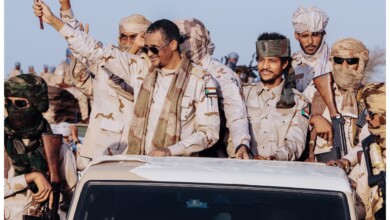
Reports also indicated that the Sudanese Army has begun deploying Tigrayan fighters to battlefields such as Khartoum, Darfur, and Kordofan to bolster its armed forces, as the latter are suffering from exhaustion due to the ongoing conflict.