UN Report: Da’esh is training militants in Sudan for deployment in Africa
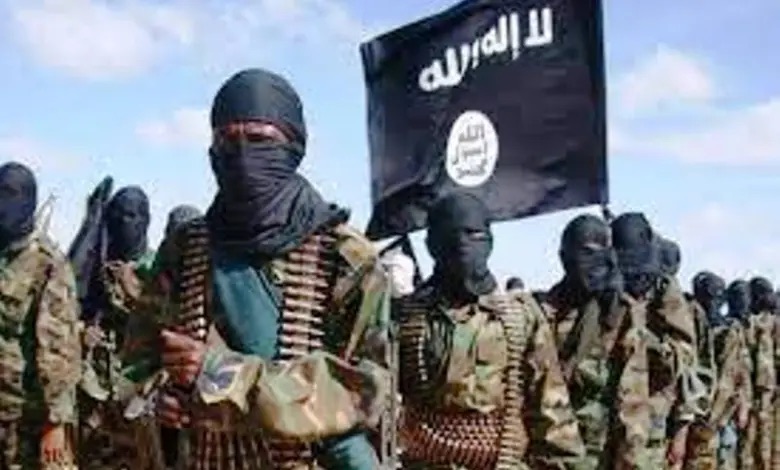
A recent UN report has revealed that the terrorist group (Da’esh) is training militants from North Africa in Sudan, with the aim of redeployment to the region.
A report submitted to the UN Security Council by the Analytical Support and Sanctions Monitoring Team on ISIL (Da’esh), Al-Qaida and Associated Individuals and Entities noted that ongoing counterterrorism efforts have curbed ISIL (Da’esh) and Al-Qaida elements in North Africa.
However, according to (Al-Ain News), the report, presented to the Security Council last July, stated that “ISIL (Da’esh) is attempting to reconstitute its presence in the region by recruiting North African fighters, training them in the Lake Chad basin, Sudan and Somalia, and then redeploying them.”
The report, which covers the period (from December 14th to June 22nd), explained that the goal of this move is an effort to “revive the dormant Dhu al-Nurayn office, overseen by the Al-Furqan office since 2023.”
The Challenges
The report revealed that “Regional North African Member States highlighted challenges in managing the return of foreign terrorist fighters from the Iraqi-Syrian zone,” noting the dismantling of an ISIL (Da’esh) facilitation cell in Libya that “laundered money through front companies to help fighters and their families escape Al-Hawl Camp in the Syrian Arab Republic and relocate to Libya, where they were housed in ISIL (Da’esh)-funded safehouses.”
The Muslim Brotherhood is the Nucleus of ISIL (Da’esh)
Regarding this development, Maher Farghali, a researcher on extremist movements, told (Al-Ain News) that the war and its consequences in Sudan create opportunities for the movement and settlement of dangerous elements, exacerbating ISIL’s terrorist activity in the region.
Farghali noted that the “Dinder Cell,” which was uncovered in (2012) after they attacked a Police Station in the Dinder area of Sennar state, eastern Sudan, was the nucleus of ISIL’s presence in the African country.
He added, “It turned out that -apparently- the cell members were sons of leaders of the Islamic Movement at the time, and numerous criminal charges were brought against them. The Brotherhood took action, and an intellectual review committee was formed, which recommended their release because, in the committee’s opinion, they had abandoned extremism.”
The Precarious Security Situation
According to Maher Farghali, “Da’esh demonstrated increased interest in Sudan following the fall of Omar Al-Bashir’s regime in (2019),” explaining that a previous report by the UN Panel of Experts, issued in (2023), estimated the number of Da’esh members in Sudan at between (100 and 200), led by an Iraqi man known as Abu Bakr Al-Iraqi, who runs a group of companies in Africa.
The researcher on extremist movements explained that the ongoing war in Sudan contributed to the precarious security situation, that -in turn- facilitated ISIL’s growth, as the African country served as a transit point for the North and Center of the African Continent.
A Call for Positioning
“Da’esh returned to discussing Sudan last January, publishing a message in its media circles titled ‘The Forgotten Sudan,’ calling on its members in Sudan’s neighboring countries to reposition themselves, revitalize their organization, and establish a presence inside Sudan,” according to the researcher on extremist movements, Maher Farghali.
He added, “Da’esh is attempting to strengthen its influence in Somalia, Yemen, Djibouti, and Kenya, which highlights Sudan’s importance in this process, particularly in the transfer of funding, weapons, and logistical support.”
Farghali concluded his statements by sharing that, “The Organization is also attempting to inch closer to mines and seas, therefore its naturally seeking to strengthen its activity in Sudan with the aim of getting closer to the Red Sea.”