Sudanese Call to Ban the Islamists… A Moment of confronting terrorism masked as religion
Abdel Moneim Suleiman
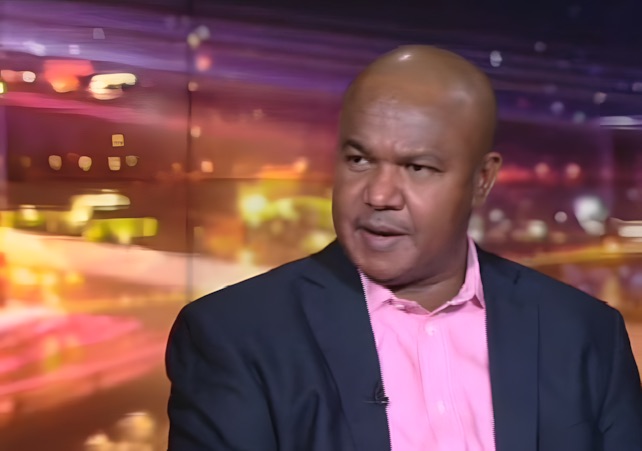
In the midst of the devastation, where Khartoum goes to sleep to the sound of bullets and wakes to the groans of the hungry and displaced persons, a different voice has been steadily rising from abroad. Its not one made by cannons or formulated by hollow statements, but rather by the suffering, as its written in the blood of the innocent.
This particular call, unlike any other, emerged from the ashes of the nation as a cry for help and a belated reckoning for decades of deception. Its the call of the Civil Democratic Alliance of Revolutionary Forces (Sumoud), led by Dr. Abdullah Hamdok, Prime Minister of the revolutionary government -unfortunately- overthrown by a military coup.
The Alliance’s call, issued the day before yesterday, doesn’t merely describe the tragedy; it calls it by its name, demanding —with a boldness that has long been confined to the throat— that the Sudanese Islamic Movement and its Party (the National Congress Party) be placed on international terrorist lists.
In their haste, one might read this demand as a purely political act, however, at its core, its much more profound than that. Its an attempt to assert justice, to characterize pain using the tools of International Law, and to break a Sudanese exception that has enabled one of the most brutal regimes to hide for decades behind the masks of religion and tradition.
Following the first Islamist coup in (1989), what the country has witnessed wasn’t limited to being a traditional political tyranny, but rather a regime that has striven to uproot society from its roots: systematic oppression, genocide in the marginalized regions, persecution of dissent, and the consecration of the notion of a monopoly on the “divine right” to rule. When the popular revolution toppled this regime in that glorious December, the regime’s deep-rooted network didn’t fall with it. Rather, its cells continued to multiply in the shadows, lurking at every step towards democracy, especially within the Sudanese Armed Forces (SAF) and Security Service.
For a political Party today —in the midst of chaos and death— to call for this organization to be designated as a terrorist entity doesn’t merely mean naming the killer, but rather exposing its weapons, its methodology, and its ideological motivation. It’s a moment of confrontation with a false narrative that has promoted Islamism as a moral project —one that, unfortunately, finds regional support— while, in its experience on the ground, it has been no more than a system of murder, violence, corruption, domination, and systematic discrimination.
In the statement, (Sumoud) not only relied on collective memory, but also presented a damning case: from sponsoring the terrorist organization al-Qaeda to arrest warrants for regime leaders to stand trial before international courts; from bombing embassies to ethnic cleansing; from the abuse of women to the exploitation of religion as fuel for an unending war. In this sense, classifying this organization isn’t a political rivalry, but rather a safeguard for Sudan’s future from a catastrophic recurrence from which no one will be spared.
Nevertheless, the real challenge lies not only in convincing the world, but also in convincing the Sudanese people first and foremost, that reconciling with the past doesn’t equate to burying it, but rather confronting and questioning it. No peace can be born from impunity, and no democratic transition can be sustained by a Movement that rejects the nation-State’s existence and believes in absolute control in the name of the Almighty, the Most Gracious, the Most Merciful!
This call doesn’t necessarily aim to exclude for the sake of exclusion, but rather to create a necessary distinction between those who accept living in a pluralistic, civil State and those who view democracy as blasphemy, diversity as a curse, peace as betrayal, and a threat to the security and stability of neighboring countries and the region.
Therefore, the demand to ban the National Congress Party (NCP) from political activity comes as a respite and peace to the Sudanese people exhausted by cycles of death, violence, and tyranny.
This is a moment to draw the lines between politics and terrorism, between thought and denial, between partnership and threat.
The Sudanese people, aware that the Muslim Brotherhood of Sudan —with their affinity to bloodshed, corruption, and religiously cloaked rhetoric— are transforming, for their own survival, into tools of hidden hands operating in the shadows of regional and international interests. Hence, they aren’t asking the world for a miracle. Rather, they are demanding a simple right: that their blood not be shed as a price for these deals, that their country not be obliged to pay the price for a conspiracy that threatens its security and unity, and that their right to live in a homeland worthy of their humanity, where democracy prevails, and where the dignity, justice, and freedoms are protected.
We sincerely hope this call will find a receptive ear in the free world, which has experienced the true face of the Muslim Brotherhood and been burned by the fire of their terrorism and deceit disguised as religion. We hope that it will also resonate with the countries of the region, particularly; the United Arab Emirates, which has been, and continues to be, at the forefront of those confronting this looming threat to humanity, identity, and stability.
Let what others have realized, even after a painful delay, be the beginning of saving the tattered remains of Sudan.