The Quartet Meeting in Washington and the omitted issues
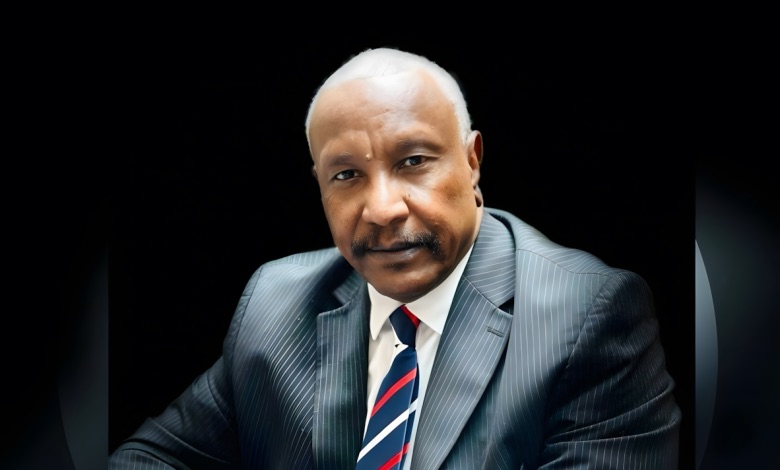
Yasser Arman
At the outset, we ought to welcome all regional and international interest aimed at stopping and ending the war in Sudan, especially when it comes from countries with significant influence, such as the United States, the Kingdom of Saudi Arabia, the Arab Republic of Egypt, and the United Arab Emirates, whose consensus -will definitely- shorten the path to peace.
Nevertheless, based on our experiences, and having had the opportunity to work closely in effective platforms for peace, stopping and ending the war, in addition to the political process for more than three decades, we can safely state that its useful to contemplate the Quartet platform with past experiences in mind.
The Quartet platform raises important questions that ought to be answered and omitted issues that must be brought up in an effort to highlight it. As foreign mediators, especially the US Administration, have traditionally worked with the Sudanese parties and taken their views into account in consultations held in the public sphere with the adequate participation of the active forces and public opinion.
The Washington forum failed to address the Sudanese forces or local, regional, or even international public opinion in regards to the situation at hand. Even the postponement of the forum was left to speculation on an issue that primarily concerns the future of the Sudanese men and women. And because we ought to take this forum seriously, just as every nation views their present and future with the utmost sincerity, and despite the circumstances of war, suffering, and frustration, itsimperative to engage in dialogue regarding this forum and answer some important questions:
To whom does the right to peace and the political process belong to?
Whilst we believe in the critical importance of the regional and international role, more importantly, the people of Sudan ought to preside over the peace process, in addition, mechanisms tasked with conducting transparent and open consultation with the Sudanese ought to be in place, especially while interacting with the victims of war and the democratic civil forces.
Prescribing a treatment is a process that requires meeting the patient, listening to them, and conducting the necessary examinations. To receive treatment, a healthy relationship between patient and healer is essential, and the patient is more important than disagreements between physicians.
The Quartet needs to consult with the millions of war victims and stakeholders in Sudan’s present and future, and to take their concerns and aspirations into account, particularly accountability and justice, a new State-building project, and the completion of the revolution.
Civil and political society forces ought to take an interest in the Quartet platform, demand the necessary consultations, and lead a popular campaign through all platforms, media, and effective methods. We mustn’t stand idly by while our country’s future, security, unity, and Sovereignty are threatened.
The Comprehensiveness of the Solution and Mediation:
The Quartet includes important powers, nevertheless, it needs others, such as the Intergovernmental Authority on Development (IGAD), the African Union, Sudan’s closest neighbors, countries involved in the peace process in Sudan, the United Nations, the European Union, and the permanent members of the Security Council, in a partnership that supports the Quartet’s efforts and through a mechanism that adds to the comprehensiveness of mediation, given the Quartet’s unique status.
The Sudanese parties essential for the achievement of the solution need a mechanism for participation and inclusion. The Quartet recognizes that the National Congress Party and the Sudanese Islamic Movement are the primary obstruction to solutions as well as internal and external stability, for they are also linked to terrorism and should be designated as terrorist groups.
In conclusion, the Quartet needs an integrated perspective and a comprehensive package, the gateway to which should be addressing the humanitarian catastrophe and protecting civilians through an immediate humanitarian ceasefire, a monitoring mission as an entry point for the comprehensive package, the expansion of civilian space, and the return of displaced persons and refugees to their homes from which they were unjustly evicted.
Additionally, the cessation of hostilities ought to be linked to a comprehensive political process that addresses the roots of the crisis, most notably of which is a unified professional Army, democratic civilian governance, rural issues, non-discriminatory citizenship, as well as the other issues referenced in the new project.
Postponing the Quartet meeting is beneficial and an opportunity to reach a sound, successful, effective, and non-fragile peace and political process that directs its leverage on the forces of war and restrains them.
This requires an internal front that trusts the Quartet’s roadmap and works with it to pave the way for a sustainable and just peace.
Its rather beneficial for the Quartet and its partners for our people to trust the peace and political processes, and stand in unison with them in the face of the forces of war.
Peace and democracy are of the Sudanese people’s inherent rights.