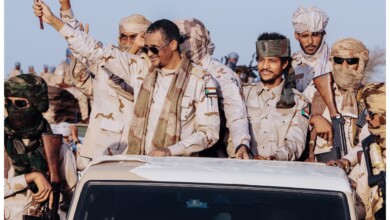
An alarming increase in crime rate… Armed chaos exacerbates the suffering of Khartoum residents
Khartoum, the capital of Sudan, under the control of the Islamist Movement militias led by Abdel Fattah Al-Burhan, is undergoing a state of armed chaos and lawlessness, according to a recent report by the (Africa Defense Forum), which reiterated its warning of the emergence of areas of influence and control, given the inability to curb armed militias.
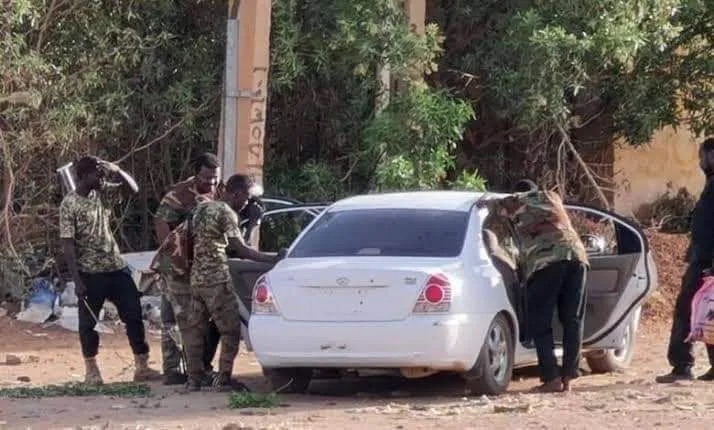
According to local media, Khartoum has witnessed an “alarming increase” in the number of crimes in recent days, amidst widespread chaos resulting from the uncontrolled presence of armed groups, despite the “formal” decision issued by the Port Sudan Authorities to evacuate the capital of militias within two weeks.
According to estimates by the (Africa Defense Forum), Sudan, amidst the escalating conflict over the division of ministries and power, is home to (105 Armed Movements). Whilst the country is currently experiencing a war that has continued for the third consecutive year, resulting in the deaths of more than (150,000 people) and the displacement of approximately (15 million) others, according to UN figures.
The Sudanese people took to social media to express their fears that the abundance of weapons in Khartoum as well as other cities under the control of Al-Burhan’s forces would eventually lead to the emergence of a new reality governed by “the most heavily armed and powerful,” which fundamentally contradicts the calls for Sudanese citizens to return to the capital.
Contrary to Reality
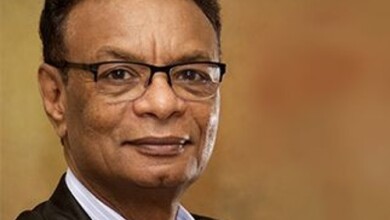
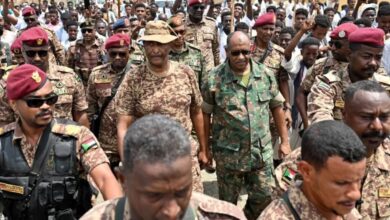
Media professional and Sudanese affairs expert Ammar Saeed believes that “Al-Burhan’s coup authority,” through repeated calls for citizens to return to the capital, Khartoum, supported by field visits by both Al-Burhan and Kamil Idris, is merely an attempt to “enhance the image,” however “the reality on the ground indicates the exact opposite of what is being promoted.”
Ammar Saeed confirmed in a statement to (Erem News) that “Khartoum is witnessing an unprecedented state of security chaos,” in light of the widespread and uncontrolled abundance of weapons in the hands of armed groups and militias. He added, “The lives of civilians are in constant danger, with an atmosphere of terror and instability entrenched in most neighborhoods of the capital.”
He points out that “looting and armed intimidation operations increased in Khartoum following the withdrawal of the Rapid Support Forces (RSF),” considering this “a clear evidence that proves the presence of other organized and armed parties in the area, as said parties continued to perpetrate violations in secret.” In addition, he believes in the existence of -what can be called- “creative chaos,” aimed at thwarting any attempts to restore stability.
The current situation further exacerbates concerns in Khartoum following reports of the entry of unwanted armed militias into the capital, some of which have been linked to previous violations committed in Darfur and other conflict zones. Ammar Saeed shared that these militias “have contributed to deepening the crisis, especially after armed clashes broke out between them in their conflicts within Khartoum.”
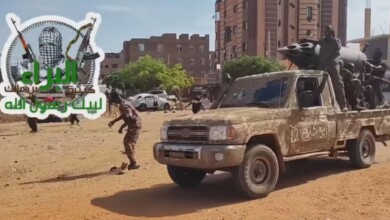
Activists as well as human rights activists have documented dozens of crimes committed by armed groups, some affiliated with Darfuri Movements allied with Al-Burhan, and others are operating under the command of the Brotherhood’s Al-Baraa militia.
The service situation in the capital is by no means different from the security situation, with basic supplies such as water, electricity, and communications deteriorating dramatically. The aforementioned -naturally- renders any discussion about the return of citizens or the start of reconstruction premature “unless practical steps are taken to control the security situation and disarm irregular groups,” according to Ammar Saeed.