
Egypt’s support for the Islamists isn’t surprising!
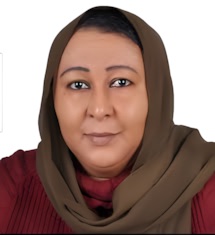
Rasha Awad
Along the aisles of foreign policy, there are no strict orthodox principles, nor are there romantic, dreamy ideals. The logic of the State’s interest governs, as first and foremost. Nevertheless, the only exception to the aforementioned principle of self-interest in managing foreign relations is Sudan, which has managed its foreign relations throughout its independent history according to the logic of leftist romanticism, of Arab nationalism, and other times according to the logic of Islamist ideological riots.
Egypt’s interests are tied to subjugating Sudan, and its only means of achieving such a feat is through maintaining a weak, unpatriotic, and corrupt military regime whose corruption allows the flow of smuggled gold, livestock, and strategic crops to Egypt at low prices and without any controls that take into account Sudan’s interests. This level of subservient when displayed by the regime reduces Sudan’s voice to a mere echo of Egypt’s in regards to the Nile water and other issues as well. Its in Egypt’s best interest to disrupt agricultural production in Sudan’s Nile-irrigated projects so that the latter’s share of the water can be allocated to Egypt, which -in itself- is a very old matter. For example, when the revolutionaries of the (1924) Revolution raised images of Egyptian King Fuad I in their demonstrations and chanted for the unity of the Nile Valley under the Egyptian crown, the leader of the Egyptian nation, Saad Zaghloul, was striving to persuade the British to back down from implementing Al-Jazeera Project! As for the Egyptian troops whose support the revolutionaries were expecting, their weapons depots were closed and they were recalled to Egypt, leaving our romantic revolutionaries to be mowed down by British bullets!
Therefore, there is no need to be surprised by Egypt’s alliance with the Islamists or one of their factions in Sudan. Yes, Egypt surgically removed the Muslim Brotherhood from power, even though they came to power through credible elections —in fact, the first truly democratic elections in Egypt’s history. It removed them because the “State’s mind” in Egypt is mature and vigilant, and is well aware that the germ of political Islam is destructive to nations, as its control over any nation only means tearing said nation apart and setting it back centuries. However, the control of political Islam in Sudan, especially in its current (Kizani) version, which consists of traitors and mercenaries willing even to sell their mothers for power, money, and revenge on their opponents; is qualified to serve Egyptian interests. Hence, Egypt supports the Islamists (Al-Kizan) through its backing of the Sudanese Army, and defends them in regional and international forums by maintaining the hegemony of the Islamist-controlled Army over Sudan’s future, and by systematically seeking to exclude democratic civil forces from any regional forum concerned with Sudanese affairs.
The Islamists’ control over Sudan means that its bound to suffer under sanctions and international isolation, and that Egypt will remain as its only window to the world. This -in turn- will award Egypt billions of dollars in economic profits. As for the Islamists’ economic policies, they’re sufficient to remove Sudan from the cycle of agricultural and industrial production and drown the State in a parasitic economy, where it won’t be able to benefit from the advantages provided by the Renaissance Dam. Furthermore, if the project to divide the country succeeds, and Darfur as well as parts of Kordofan secede; what remains of Sudan will be merely southern governorates of Egypt. Therefore, there is no contradiction in Egypt’s alliance with a security-military Islamist Movement in Sudan, at the same time that the Islamists are fighting the Egyptians, represented by the Muslim Brotherhood, to the point of uprooting them from the positions of power they were granted through elections. For what governs the Egyptian State in its foreign relations -naturally- are its interests, an ideal that surprises no one in this world except the romantic Sudanese! Those who speak of the logic of interest – which, by the way, is a legitimate and objective logic in politics – with disdain and moral condemnation! Our duty as Sudanese is to start from the foundation of our national political and economic interests and make the aforementioned the most important criterion governing our alliances. As expected, any effort in such a direction is long and arduous. It begins by separating romantic interests from foreign relations, ideological insanity and absurdity from the economy, just as religion and the State are preferably separated.
Is Egypt’s position in support of military rule in Sudan as well as its support for the Kizani Security and Military current unchangeable?
According to current data provided, it can only change under significant international and regional pressure on Egypt to stop re-empowering the Security-Military-Islamists current in Sudan. This can only be possible if a genuine and effective international as well as regional will to prevent the Islamists from controlling Sudan is present, not for the sake of the Sudanese people, but in an effort to achieve interests related to the security of the Red Sea and the Horn of Africa.
At the Sudanese national level, and this is most important, a historical bloc ought to be organized to form an impregnable shield against the return of military dictatorship and the Islamists regime to rule Sudan by force.
We shouldn’t understand the call for Sudanese to rally to defend their interests as a call for absolute hostility toward Egypt. Rather, it is a call for a new political equation within Sudan, capable of reducing Egypt’s options to only restructuring its interests in Sudan according to a new approach that bases relations on shared interests, not exploitation, and equality, not subservience. From a strategic perspective, building interests on a just foundation makes them sustainable. The path of exploitation and subservience may appear, on the surface, to be a quick path to significant gains, however, it will be neither sustainable nor safe, especially in the shifting sands of Sudan and the significant changes in political awareness within Sudan, as well as regional dynamics.
The Sudanese, particularly the political elite, ought to realize that Egyptian policy toward Sudan won’t change through wisdom, good advice, and flattering statements. Rather, it will change through bold patriotic discourse that reveals to the people everything that has been historically and currently unspoken in the relations between the two countries, provided that all of the above is supported by a solid and influential political bloc domestically and through an intelligent international and regional alliance that supports Sudan.
Al-Taghyeer