At last… El Fasher as the beginning of a new national vision

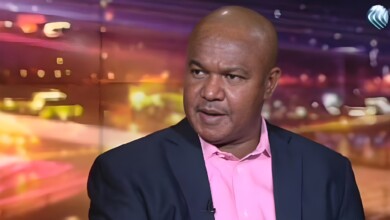
Dr. Al-Waleed Adam Madibou
The liberation of El-Fasher from the grip of the Central State represents a pivotal moment in modern Sudanese history, not only from a military perspective, but as a profound shift in the balance of power between the center and the marginalized regions as well. Such an inevitable event represents the end of one phase and the beginning of another, in which the relationship between the countryside and the city, between the dominant center and the marginalized regions, is being reorganized on new, more just and equitable foundations.
For decades, Darfur, along with other parts of rural Sudan were subjected to a system of governance that perpetuated ethnic and social hierarchies, it sought to contain local communities through formal and informal State instruments. The aforementioned system relied on a biased political, economic, and cultural structure that made the center, particularly the River Nile state, the center of decision-making and wealth, whilst keeping the marginalized regions in a state of perpetual subordination.
Such dominance was by no means coincidental or the result of natural inequalities. Rather, it was the product of a long historical project based on colonialism, which was then continued by the nation-State in various forms —through institutionalized discrimination, deliberate marginalization, and the exclusion of marginalized communities from positions of actual decision-making. The liberation of El-Fasher signifies not only a military victory in a battle against a collapsed central authority, but also the resumption of initiative put forth by the marginalized communities. Its a moment of revelation, unveiling the fragility of the central system when it loses its tools of control.
Nevertheless, this transition cannot be complete without a deeper understanding of its dimensions: its a moment in time dedicated to reviewing the Sudanese model of governance, which has continued to reproduce itself through coups carried out by the elites, in addition to the repetition of the same actors without making any real structural changes. Furthermore, its a call to rebuild the State on new foundations: a State that recognizes diversity, neutralizes the military, and adopts a truly federal system of governance that restores consideration for local communities.
The events taking place at the moment in Darfur and Kordofan aren’t merely limited to being an armed conflict. Its a direct result of the failure of the central State’s project to embrace the Sudanese diversity and achieve justice as well as balanced development. What the marginalized forces are now proposing is a redefinition of the concept of “nationalism,” disregarding the unilateral formula that has relegated Sudan to the center and forced subordination or rebellion on the rest.
Therefore, the liberation of El-Fasher isn’t an exclusively regional battle; but a distinctly Sudanese moment. Moreover, it’s the product of accumulated injustices, and an opportunity to establish a new national project based on popular will and the values of justice and equality, not on the legacy of power or historical privileges.
In short, for this transformation to become a lasting reality, a comprehensive national dialogue is necessary, one that recognizes the reality of the crisis and transcends the superficial solutions long relied upon by political elites. Its time -at last- to adopt an electoral presidential system that guarantees fair representation of local communities and ensures the equitable distribution of resources and power. Additionally, a secular State ought to be established, one that prevents the encroachment of politicians on religion and promotes equal citizenship.
In conclusion, the challenges ahead are significant, but the moment of truth has arrived. If this transformation isn’t used to shape a new future, we will continue to be trapped in a vicious cycle of wars and failed transitions.
The liberation of El-Fasher, then, doesn’t represent the end of the battle, but rather its beginning. The beginning of reclaiming Sudan from the ruins of a failed State, and the beginning of envisioning a homeland that accommodates all its citizens.