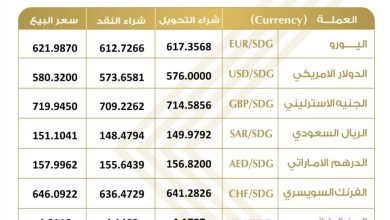
Amidst significant shortage in liquidity, the US dollar approaches the 3,000 poundbarrier
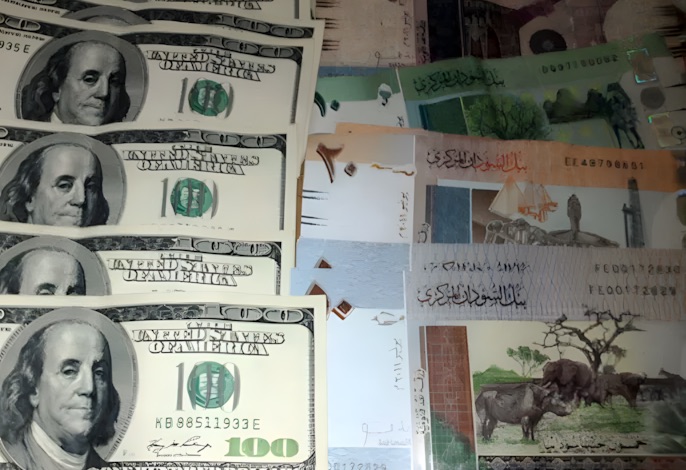
Whilst the general conditions continue to rapidly deteriorate, foreign currencies have reached a record high against the Sudanese pound, amidst a significant liquidity shortage, compound with the banks’ inability to cover imports of essential commodities (wheat, fuel, and medicine).
Importers, traders, and citizens are forced to purchase currencies from the parallel market, where the dollar exchange rate has exceeded (2,830 to 2,850 pounds) per dollar and is expected to surpass the (3,000 pounds) mark, a record high.
Other foreign currencies have witnessed similar increases in exchange rates, with the Saudi riyal reaching (760 pounds), the Emirati dirham (776 pounds), the euro (3,352 pounds), in addition, the British pound reached a value of (8,351 pounds), whilst the Egyptian pound rose to more than (57 pounds) in exchange rate.
Furthermore, due to increased demand and a scarcity of foreign currency supply, the dollar exchange rate is expected to continue to rise.
Meanwhile, banks face significant challenges due to a shortage of foreign exchange resources and high withdrawal rates from domestic and foreign resources, in light of the shortage of foreign exchange inflows.
Economic experts indicate that foreign exchange rates will not decline amidst the ongoing war, declining production, and the cessation of economic activities that previously contributed to increased public revenues. They emphasize that citizens are the most affected party by the continued rise in prices of basic goods and services.
The Sudanese economy has long been suffering under the weight of catastrophic conditions, with increased spending on the ongoing war in addition to challenges threatening the country’s economic stability.
Following the outbreak of the war between the Sudanese Armed Forces (SAF) and the Rapid Support Forces (RSF) on the (15th of April, 2023), the economic crises have been exacerbated by the sharp decline in the value of the national currency. As the dollar exchange rate rose from (560 Sudanese pounds) to more than (2,700), exacerbating -in turn- citizens’ suffering due to the crushing burden of inflation and a lack of liquidity sufficient to meet the most basic daily needs.