Is Al Burhan planning to recreate Hamas in Sudan ?
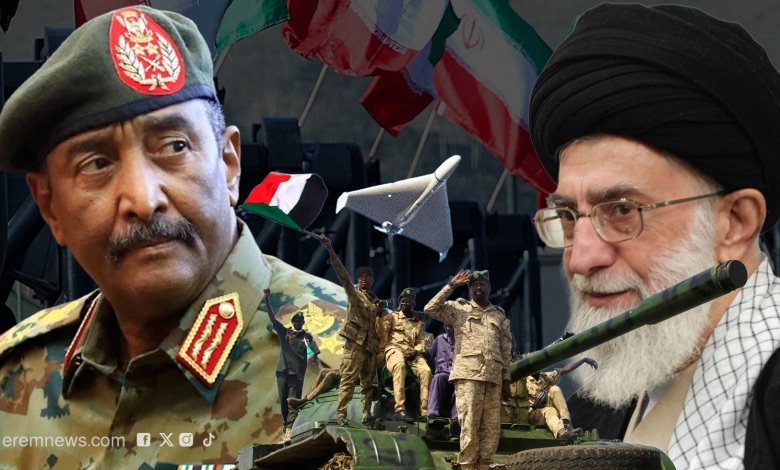
An Israeli report revealed information regarding a project being prepared by the Commander of the Port Sudan forces, Abdel Fattah Al-Burhan, and the allied Muslim Brotherhood militias in Sudan; aiming to host operatives and leaders of Hamas. This particular plan is intended to rebuild and reorganize the Movement after the blows it suffered in the Gaza Strip due to its war with Israel.
A report by the Hebrew newspaper, The Jerusalem Post, stated that Al-Burhan has become a pliable tool in Iran’s hands in Sudan and has begun implementing its plan to recreate Hamas, as the Movement is allied with him and the Muslim Brotherhood. The newspaper indicated that Al-Burhan is providing a safe haven for the Movement’s leaders and operatives in Port Sudan.
In this context, Sudanese sources recently revealed to (Erem News) what they called a “suspicious deal” orchestrated by Al-Burhan to host members and leaders of Hamas, who are expected to be removed from the Gaza Strip as part of upcoming ceasefire agreements.
The sources indicated that Hamas enjoyed influence and privileges in Sudan during al-Bashir’s rule and owned real estate as well as land. However, after the revolution that ousted Al-Bashir, these funds were frozen. Nevertheless, Al-Burhan is planning a settlement with the Movement’s leaders regarding these funds, ensuring the mutual interests of both parties.
Following the outbreak of the war between the Port Sudan forces and the Rapid Support Forces (RSF), Al-Burhan has adopted a policy of recruiting foreign fighters, such as the Eastern Brigade and Ethiopian Tigrayan mercenaries. His efforts to recruit Hamas operatives are a continuation of this policy.
The same sources indicated that the efforts to recruit Hamas operatives are supported by pressure from Tehran and the Islamic Brotherhood Movement in Sudan -Al-Kizan- which is allied with Al-Burhan.
The intertwined relationship between Al-Burhan, Al-Kizan, Tehran, and other regional parties supporting the Muslim Brotherhood represent a precursor to the reception of the Movement’s members and facilitating their arrival in Sudan, according to the sources.
In recent months, a photo circulated, documented a member of the Brotherhood militia allied with the Port Sudan forces carrying a (Al-Yassin 105) missile, used by the Qassam Brigades, the military wing of Hamas, in its war in Gaza. This -naturally- raised valid questions regarding the reason and method by which these weapons were made available to Al-Burhan’s forces.
According to sources’ explanations, this photo directly confirmed Iran’s role in supporting the two Islamist Movements in Gaza and Sudan, and supplying them with the same weapons.
For their part, military experts viewed Al-Burhan’s intention to host Hamas leaders and members, in addition to implementing the Iranian plan in the region, as an attempt to reorganize his military plans and movements in the ongoing war on the ground against the Rapid Support Forces. This is particularly true given that Hamas members now possess military expertise that qualifies them to manage battles and ensure a qualitative difference.
According to the military sources, a number of Hamas operatives possess technological capabilities that enable them to remanufacture and assemble weapons, as well as operate drone technology, which the Port Sudan forces rely primarily on, in their battles.
Amidst regional tensions and political shifts, the Port Sudan forces have emerged as a key player in attempts to attract pro-Iranian militias in exchange for political and financial gains.
The aforementioned was confirmed by the Hebrew newspaper’s report, which stated explicitly that every day Al-Burhan remains in power is another day of expanding Iranian influence in the region. The report noted that Sudan is no longer limited to serving as a battleground for a civil war, rather, it has become an “emerging outpost” in Iran’s global terror campaign against Israeli and Western interests, such actions are aided by Al-Burhan.
The report called for direct or indirect Israeli response to thwart Al-Burhan’s plot to rebuild Hamas after its defeat in the Gaza Strip. At the same time, it noted that Washington ought to treat Al-Burhan as no more than a proxy for Tehran in the region, attempting to implement the latter’s agenda.
The Jerusalem Post emphasized in its report the need to impose economic sanctions on Al-Burhan’s regime and to launch a joint international intelligence effort to prevent arms smuggling to the Port Sudan forces and support the Sudanese Peace Government.
The newspaper’s report described Al-Burhan as “The gatekeeper of terrorism in Sudan,” in reference to his explicit alliance with Tehran, through which he has garnered continued military support in his war against the Rapid Support Forces.