US Sanctions exacerbate Al Burhan’s troubles
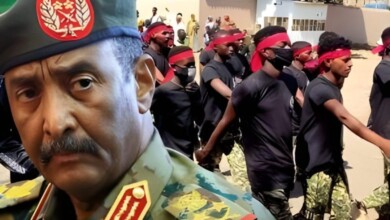
The US sanctions on the de facto authority in Port Sudan have taken effect. They were imposed after Washington confirmed that the Sudanese Armed Forces (SAF) used internationally prohibited chemical weapons last year in the country’s bloody civil war.
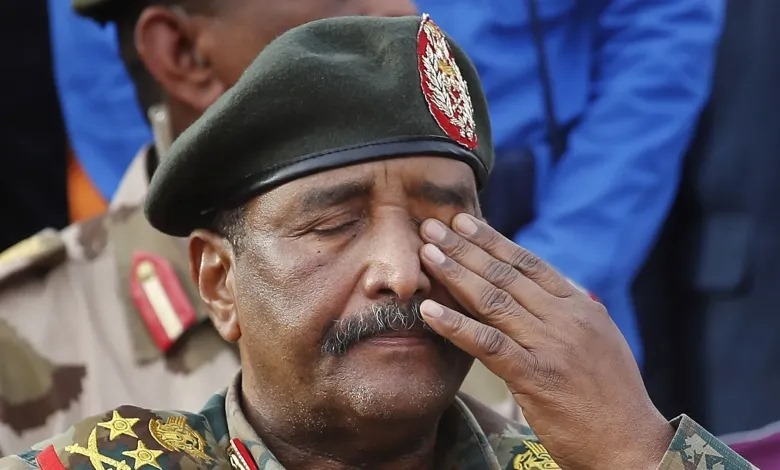
This development represents a significant escalation of international pressure on the Commander-in-Chief of the Sudanese Army, Abdel Fattah Al-Burhan, especially since the United States had previously lifted some sanctions imposed on Sudan following the fall of Al-Bashir’s regime.
Through these sanctions, the United States aims to pressure the Sudanese Army to reconsider its positions and accede to the desires of local and regional parties, to resume negotiations in an effort to formulate a roadmap that would end the war.
At this juncture, Al-Burhan is facing accusations of obstructing all efforts aimed at ending the conflict, particularly after he refused to negotiate with the Commander of the Rapid Support Forces (RSF), Mohamed Hamdan Daglo, known as “Hemedti,” insisting on conditions described as “crippling.” Meanwhile, Hemedti, has expressed his sincere willingness to engage in any initiative that would culminate in solutions to establish the new Sudanese State.
The aforementioned US sanctions will haul Sudan back to the “tunnel of isolation” after it experienced a period that can be characterized by putting forth diligent efforts into establishing relations with the international community. Moreover, the sanctions are expected to negatively impact foreign investment and exacerbate the economic deterioration, that included the accelerated rate at which the Sudanese Pound is losing its value, in addition to the rising commodity prices, all of the above further exacerbates the humanitarian situation in the country.
Furthermore, the US government announced in a notice published Friday in the Federal Register that the sanctions -which include restrictions on US exports, arms sales, and financing to the Port Sudan Authority- will remain in effect for at least one year.
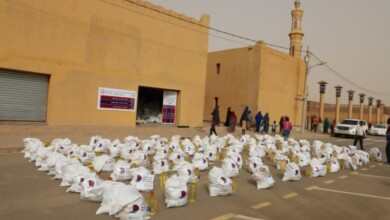
According to the Administration, aid to Sudan will be halted “with the exception of urgent humanitarian assistance, food, and other agricultural commodities and products.” However, partial waivers have been issued for some measures because they are deemed “necessary to the national security interests of the United States.”
Although the Sudanese Army relies heavily on suppliers such as Russia and China, these sanctions could make it more difficult to obtain certain components or services and may affect international credit lines.
Last month, when announcing the sanctions, the US State Department shared that, “The United States calls on Port Sudan Authority to cease the use of all chemical weapons and to fulfill its obligations” under the Chemical Weapons Convention (CWC) -which is an international treaty signed by nearly all countries that prohibit their use.
The New York Times (NYT) reported in January that the Sudanese military had used chemical weapons at least twice during its war with the Rapid Support Forces.
The newspaper, citing unnamed US officials, shared that the weapon used appeared to be Chlorine Gas, which can cause severe respiratory distress and even death.
Relations have been strained for decades between the United States and Sudan, which was ruled by Omar Al-Bashir from (1993) until his ouster in (2019). In addition, Al-Bashir has long been accused of sponsoring terrorism.
After Bashir was ousted by a popular uprising in (2019), the United States removed Sudan from its State Sponsors of Terrorism list and initiated the process of lifting sanctions.
However, some sanctions were reimposed following the (2021) coup led by Al-Burhan, before the war broke out in (April 2023).
Efforts to mediate a ceasefire, including those initiated by the Administration of former US President Joe Biden, were met with failure. And civilians in Sudan have long borne the brunt of sanctions imposed on their country.
Sudan, the third-largest country in Africa in terms of territory is experiencing a humanitarian crisis described by the United Nations as the worst in the world, with more than ten million people displaced and a declared famine in several parts of the country.
The United States was the largest donor to Sudan in (2024), contributing (44.4%) to a ($2 billion) UN humanitarian response plan. After US President Donald Trump suspended the majority of foreign aid, the United States reduced its contribution by approximately (80%).
However, in (2024), US exports were valued at ($56.6 million), according to data from the Federal Bureau of Statistics.
The war broke out in Sudan in mid-April (2023) between the Sudanese Armed Forces and the Rapid Support Forces. It has resulted in tens of thousands of deaths and the displacement of (13 million) people, four million of whom fled abroad. In addition, the ongoing civil war created the worst humanitarian crisis in the world, according to the United Nations.