Chemical Weapons and the collapse of the Sudanese Army

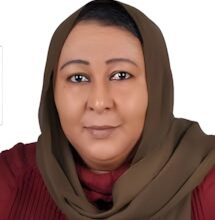
Dr. Al-Waleed Adam Madibou
“When innocents are targeted, the very essence of our humanity is violated. Silence is not neutrality, it is complicity.”
~Kofi Annan
The aftermath of the chemical massacre in Sudan differs vastly from the situation that preceded it. It’s a pivotal moment that shattered the remaining illusion of neutrality and pushed the human conscience to the brink of truth: What took place can’t be limited to a military error, indeed its a full-fledged war crime, revealing the complete collapse of State institutions and the transformation of the Sudanese Armed Forces (SAF) into a tool of mass murder in the hands of old alliances and narrow loyalties.
Medical reports and field testimonies from Darfur, Khartoum, and Omdurman document the use of weapons suspected of containing chemicals in populated areas. These weren’t accidental attacks, but systematic bombardment targeting defenseless civilians, in incidents that amounted to crimes against humanity and warrant unwavering accountability.
Given this reality, it is no longer acceptable for the international community, including the United Nations and the African Union, to resort to expressions of “deep concern.” Silence in regards to crimes of using internationally prohibited chemical weapons is blatant complicity, and failure to hold the perpetrators accountable is a green light for further atrocities. An independent international investigation is an urgent requirement, in addition to the referral of all parties involved -including SAF leaders- to the International Criminal Court (ICC). Furthermore, imposing a no-fly zone over civilian areas has become an urgent humanitarian necessity to protect the lives still at the mercy of the aerial attacks.
The Sudanese Army has lost its character as a national institution. It has been reduced to a militia with official features, composed of remnants of the political Islamist alliances in addition to officers subservient to tribal loyalties and corrupt interests. It no longer protects the nation, but rather governs it by weaponizing internal terror. The use of internationally prohibited chemical weapons is not an isolated incident, but the culmination of a long series of violations: from the bombing of hospitals and bakeries, to the massacres in El-Geneina, Kereneik, and Kutum, all the way to the ethnic cleansing campaigns in West Darfur. More importantly, all of the aforementioned instances are documented with audio and video evidence.
The reality can no longer be glossed over or denied: Sudan has no future under the rule of a conventional Army that monopolizes weapons and uses them against its own people. Reform is no longer an option; rather, complete dismantling has become a national duty. A new Army is the requirement of the present, an entity with a clear defensive doctrine, thriving under civilian leadership, built from scratch to serve the citizens, not oppress them. Accountability ought to be the first step, and justice is the only path to peace.
In this context, journalist Rasha Awad reminds us, in her article “The Egyptian Army in Sudan,” that the military institution was never purely nationalist. Rather, it was born subject to Egyptian influence, and its history is a series of betrayals of Sudan’s interests and Sovereignty. This structural dependency explains the Sudanese Army’s persistent bias against any independent national project.
Sudan doesn’t need a new agreement that recycles warlords and rewards the regime’s criminals. Rather, it needs a radical break with the military State and its Islamist militias. Any delay in this break means more victims, more mass graves, and more homes collapsing on their owners’ heads under aerial attacks using internationally prohibited chemical weapons.
The use of internationally prohibited chemical weapons is not just a crime, but a bloody cry calling us to start over, far removed from the military establishment and the religious State. Its time for a new Constitution, impartial civilian institutions, and instruments of governance untainted by the blood of innocents.