Chemical weapons controversy and the narratives of the fallen era
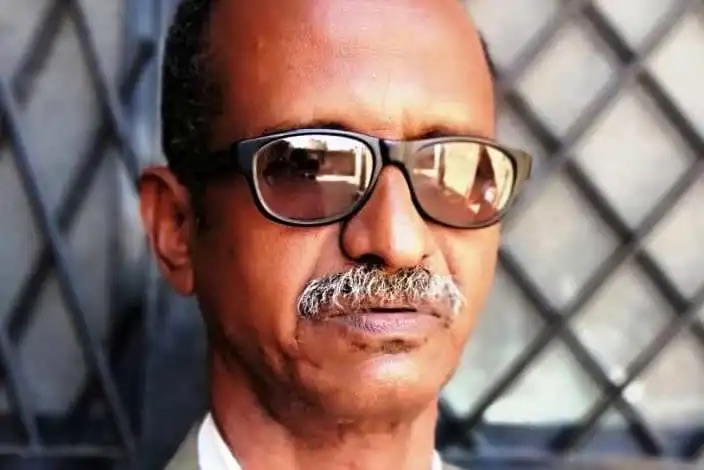
Khaled Fadl
On the eve of the UN Security Council’s resolution to refer the report issued by the International Commission of Inquiry (COI) headed by the Italian Judge, Antonio Cassese, regarding crimes committed in the Darfur War during (2003 and 2004), my colleague, journalist Mohamed El Amin, hosted me on the phone and live on air, along with Dr. Abdul Malik Al-Na’eem, to comment on the issuance of the resolution.
I knew that the interview was live, so it could not be censored or edited. This was one thing. Second, I was certain that a security order would be issued to block any commentary or opinion piece in the newspapers, along with any other type of journalistic format that addressed the resolution and didn’t conform to the narrative of the dominant regime. My prediction was indeed true. As i recall, in my comment, I expressed my emotional stance and my patriotic sentiment, which is that I don’t want my president or any citizen of my country to be tried in an international court. However, the demand for fairness, justice, and consideration for the feelings of the victims, who are also my fellow citizens, remains stronger than my personal feelings. Additionally, this decision was the result of a meticulous, prestigious international human rights investigation. I was aware of some of its procedures through human rights and media friends closely involved in its developments. Hence, it can only be approached with the same level of seriousness.
Unfortunately, as is the nature of those who know the facts and wish to obscure them, they use every means that deviate from the truth. The rhetorical campaigns began with my colleague on the other side, using a narrative of patriotism and dignity versus colonialism and conspiracy, etc. This was followed by the incitement of an atmosphere of intimidation as well as intellectual and moral terror aimed at suppressing any rational voice urging to take into consideration the repercussions of the decision. The opposition proceeded to utilize propaganda, reaching the point of begging for protection from Russian President Putin during the final days of the ousted Bashir’s rule, who remains wanted by the International Criminal Court (ICC), along with Ahmed Haroun, the head of his dissolved Party, and Abdel Rahim Mohamed Hussein, his Minister of Defense, as an objective result of an honest, extensive and professional human rights work. Nevertheless, the narratives of deception and lies published by the former regime have failed to hold up. These narratives are still being practiced by its elements, finding a lucrative market in the midst of this hateful war.
Recently, the US State Department has once again issued a sanctions decision against the Sudanese Armed Forces (SAF) Command, accusing them of using chemical weapons in the ongoing war. As per usual, and as inherited from the former regime, the reactions have begun. The military authority’s spokesperson described the development as political blackmail, whilst the Sudanese Army’s spokesperson described it as dangerous and went on to deny it. Their senior media figures followed suit. However, does the same approach work every time? Will the results of this practice of evading the situation be beneficial in all cases? Or must a different approach be devised to deal with these accusations?
Rhetorical sleight and purposefully stirring up a great deal of dust can only yield temporary results. Hajj Hamad will take over the new narratives upon his return from the Holy Land and record them for publication throughout the media as a trend, while the effectiveness of the sanctions is breaking his back and that of his fellow citizens. This is the reality that the people will have to face as the elements of the former regime lead them like cattle, reclaiming their control over power and wealth under the cover of the so-called “war of dignity.”
It is true that the Sudanese people have the right to demand a credible international investigation mediated by the Organization for the Prohibition of Chemical Weapons (OPCW). This is a just and legitimate demand. This demand also entails the legitimacy of demanding credible international investigations into the numerous violations committed throughout this war, such as extrajudicial killings and liquidations, the destruction of civilian facilities (objects), including accusations of poisoning water sources in the Salha area of Omdurman, rape, genocide, war crimes, and crimes against humanity. Additionally, this entails an investigation into those responsible for igniting the war in the first place, as well as an international investigation into the massacre of the sit-in dispersal, the crimes of killing peaceful demonstrators during and after the revolution, in addition to following the coup of October 25th, 2021. The entirety of the aforementioned crimes, known for their bitter facts, haven’t been transparently investigated, their results haven’t been published, and no measures have been taken against those suspected of involvement. Which -in turn- necessitates calling for an international investigation into the matter, similar to the call for an investigation into the US State Department’s allegations against the Sudanese Army. Accusations of corruption, resource smuggling, influence peddling, and other suspicions also cloud the Sudanese landscape.
Hate speech and incitement to violence, including mutual calls to destroy and eliminate specific tribes and groups, the persecution and liquidation of civilians, the isolation of fighters and detainees in locations emanating such pungent stench that reaches various media outlets and is documented in widely circulated videos, along with intransigence, the refusal to negotiate peacefully to end the war, and other horrific practices.
In short, the current Sudanese situation requires an explicit call to place it under direct international supervision. There is no area of life that isn’t plagued by suspicion. This is the reality that the prevailing misleading discourse avoids. Given the collapse of the government’s legitimacy since the October 2021 Coup and the dominance of terrorist militias, the hypothesis of the use of internationally prohibited chemical weapons remains valid unless it is refuted by further international investigations. I wonder, how to proceed..!!